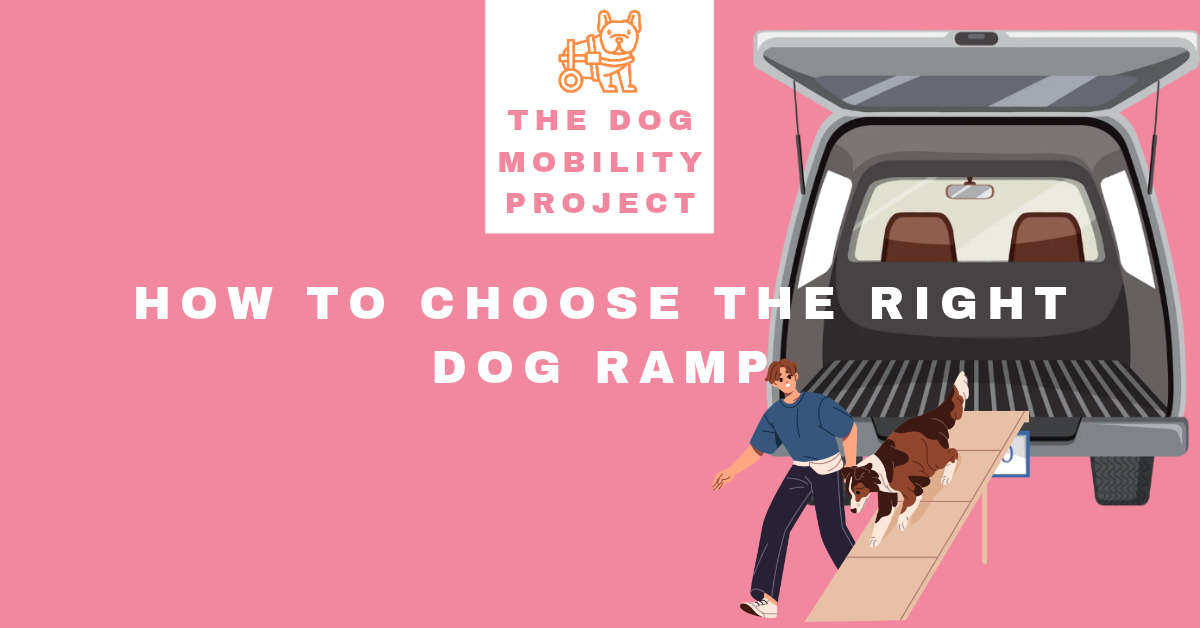
A dog ramp can make a surprisingly big difference in everyday life. For a large dog, it may mean getting into the family SUV without needing to be lifted. For a Dachshund or Corgi, it may provide an alternative to jumping on and off the couch. And for a senior dog, a ramp may help them continue enjoying activities that have become more difficult.
But not all dog ramps are designed for the same purpose.
A ramp that works beautifully beside a bed may be completely impractical for a vehicle. A lightweight folding ramp might be convenient for travel but less suitable for a dog that needs a wider, more stable walking surface.
The right dog ramp depends on where you’ll use it, your dog’s size, the height they need to reach, and how comfortably they can navigate an incline.
Here’s what to look for, including four ramp options available through Chewy and the situations where each makes the most sense.
Why Use a Dog Ramp?
Dog ramps provide a gradual incline that allows dogs to reach elevated surfaces without jumping or being lifted.
There are three common reasons pet parents consider them.
1. Reducing jumping for dogs prone to back problems
Dachshunds, Corgis, and other breeds predisposed to spinal conditions are often introduced to ramps long before they experience mobility problems.
These families may use ramps beside couches or beds to reduce the need for repeated jumping.
Intervertebral disc disease (IVDD) is a particular concern for Dachshunds and other predisposed breeds. A ramp can reduce jumping, but it is important to understand that using a ramp has not been proven to prevent IVDD or disc herniation.
Disc disease involves genetic and degenerative factors, and the relationship between everyday activity and IVDD risk is complex.
Still, many families choose ramps as a practical way to manage access to furniture, particularly when their veterinarian recommends limiting jumping.
2. Helping large dogs get into vehicles
Lifting a 70-, 90-, or 100-pound dog into an SUV isn’t practical for many people.
A vehicle ramp gives a dog a way to walk into the car instead of relying on someone to lift them.
This can be especially helpful as dogs get older, but a dog doesn’t have to be experiencing mobility problems to benefit from easier vehicle access.
3. Supporting senior dogs and dogs with mobility limitations
As dogs age, arthritis, muscle weakness, and changes in coordination can make jumping more difficult.
A ramp may provide a more manageable alternative, although not every dog will find an incline easy to navigate.
For dogs with significant weakness, pain, or neurological problems, ask your veterinarian or canine rehabilitation professional whether a ramp is appropriate.
From My Experience: Ramps Aren’t Just for Dogs Already Struggling
In my years helping families find mobility solutions for their dogs, conversations about ramps were overwhelmingly positive.
For owners of larger dogs, ramps were often a practical solution when lifting their dog into a vehicle wasn’t possible.
For smaller, long-backed breeds like Dachshunds and Corgis, the motivation was often different. Many families were thinking ahead, using ramps to limit jumping on and off furniture because they were concerned about spinal injuries and conditions like IVDD.
What stood out to me was that ramps weren’t always something families purchased after their dog began struggling. Sometimes they were making changes early, hoping to protect their dog’s mobility for years to come.
How to Choose the Right Dog Ramp
Before looking at specific products, consider five factors.
Ramp length and incline
A longer ramp generally creates a gentler incline when reaching the same height.
For example, a short ramp leading into a tall SUV will be considerably steeper than a longer ramp reaching the same vehicle.
Dogs with arthritis, weakness, or balance difficulties may struggle with steep inclines, even when the ramp has excellent traction.
There is no single medically established safe ramp angle for every dog. The goal is to find an incline your dog can navigate comfortably, using the manufacturer’s guidance and veterinary advice when appropriate.
Width and weight capacity
A ramp needs to support your dog’s weight and provide enough room for them to walk naturally.
Large dogs may benefit from a wider surface, particularly if they’re hesitant about heights or need more space to position their paws.
Always check the manufacturer’s weight rating and recommended use.
Surface traction
Traction is one of the most important features of a dog ramp.
Look for a textured walking surface, carpeting, or a rubberized grip material. Consider whether the surface will remain secure when wet, particularly for outdoor ramps.
Stability
A ramp that shifts, wobbles, or slides can make a dog reluctant to use it.
Look for nonslip feet, a secure connection to the vehicle or furniture, and a design that remains stable under your dog’s weight.
Portability and storage
A stationary wooden ramp may be ideal for a bedroom but inconvenient to move around.
For vehicles, folding and telescoping designs are generally more practical. Think about how often you’ll use the ramp and whether you’ll need to carry and store it between uses.
Find the Right Dog Ramp for Your Needs
From reducing jumping onto furniture to helping large dogs get into vehicles, these four ramps are designed for different everyday needs.

PetSafe CozyUp Wooden Ramp
A stationary indoor ramp for dogs that regularly access beds or furniture. Particularly relevant for Dachshunds and other smaller dogs whose owners want to reduce jumping.

PetSafe Happy Ride Telescoping Ramp
An adjustable vehicle ramp that helps larger dogs get into cars, SUVs, or compatible trucks without requiring their owners to lift them.

Frisco Tri-Fold Travel Ramp
A folding ramp for families who want convenient access to an SUV or truck cargo area without needing an adjustable telescoping model.

Pet Gear Free-Standing Foldable Ramp
A self-supporting ramp for families who prefer a freestanding structure rather than a conventional leaning ramp.
Affiliate disclosure: Purchases through these links may earn The Dog Mobility Project a commission at no additional cost to you. Recommendations are based on product features and intended uses, not firsthand product testing.
Four Dog Ramps Worth Considering
Affiliate disclosure: This article contains affiliate links. If you purchase through these links, The Dog Mobility Project may earn a commission at no additional cost to you. These recommendations are based on product features and intended uses, not personal product testing.
These four ramps address different needs. Rather than choosing one universal winner, I’ve separated them by the situations where their designs are most useful.
1. PetSafe CozyUp Wooden Cat & Dog Ramp

Best for: A permanent ramp beside a bed or other appropriately sized furniture
The PetSafe CozyUp Wooden Ramp is designed as a stationary indoor furniture ramp. Its wooden construction and furniture-style appearance make it a good candidate for families who want a ramp that stays in the same place every day.
Why this one stands out
Unlike folding vehicle ramps, the CozyUp is intended to become part of your home’s furniture arrangement.
That distinction matters for dogs that need consistent access to a favorite resting place. Rather than unfolding and repositioning a ramp each time, the family can leave it installed in one location.
For Dachshunds and other smaller dogs whose owners want to reduce jumping, a permanent ramp can help establish a consistent route to and from furniture.
Reasons to consider it:
- Designed for indoor furniture access rather than vehicle loading.
- Wooden construction is suited to a stationary setup.
- A dedicated ramp can help establish a consistent daily routine.
- Useful for families prioritizing a permanent furniture-access solution.
What to consider before buying: This is not the best choice for travel. Check the ramp’s dimensions against your bed or couch, confirm its weight capacity, and make sure you have sufficient floor space.
My assessment: A strong candidate for families who want a permanent ramp, particularly for dogs that regularly access the same elevated resting area.
View the PetSafe CozyUp Wooden Ramp on Chewy
2. PetSafe Happy Ride Telescoping Dog Car Ramp

Best for: Large dogs, SUVs, and vehicles where adjustable ramp length matters
The PetSafe Happy Ride Telescoping Ramp is designed for vehicle access, with an extendable walking surface that allows owners to adjust the ramp length.
That adjustability is its biggest advantage.
Why this one stands out
Vehicle heights vary considerably. A ramp that works at a comfortable incline for a sedan may be too steep for an SUV.
A telescoping design offers more flexibility because you can extend the ramp to suit the vehicle’s height and available space.
The Happy Ride also incorporates side rails and a traction surface to help guide dogs as they walk.
For families with larger dogs, this combination makes it particularly relevant when the goal is to avoid lifting a heavy pet into a vehicle.
Reasons to consider it:
- Adjustable length accommodates different vehicle heights.
- Extending the ramp can reduce the incline compared with using it at a shorter length.
- Side rails help define the walking area.
- Designed for repeated vehicle loading and unloading.
- Particularly useful when a fixed-length ramp would be too steep.
What to consider before buying: Telescoping ramps generally require more setup than simply unfolding a ramp. They also need sufficient space behind the vehicle when fully extended. Check the exact model and size, as PetSafe offers several Happy Ride variations.
My assessment: My preferred design of these four for families with large dogs who regularly travel in SUVs or vehicles with higher cargo areas.
View the PetSafe Happy Ride Telescoping Ramp on Chewy
3. Frisco Tri-Fold Travel Dog Car Ramp

Best for: Budget-conscious families who want a portable ramp for SUV or truck cargo access
The Frisco Tri-Fold Travel Ramp takes a different approach to vehicle access. Instead of extending telescopically, it folds into three sections for storage.
Its primary advantages are portability, straightforward storage, and a lower purchase price than many adjustable vehicle ramps.
Why this one stands out
Not every family needs an adjustable telescoping ramp.
If you use the same vehicle regularly and a fixed-length ramp creates a manageable incline, a folding design may be all you need.
The Frisco model folds down for transport, making it a practical option for families who want to keep a ramp in their vehicle without investing in a more expensive telescoping design.
Reasons to consider it:
- Tri-fold construction helps reduce storage length.
- A practical alternative to more expensive adjustable ramps.
- Nonslip feet and a securing strap help stabilize the setup.
- Designed for vehicle cargo-area access.
- Useful for occasional or routine travel when a fixed-length ramp is suitable.
What to consider before buying: The manufacturer specifies this model for SUV or truck-bed use, not side-door access. Its length is not adjustable, so measure your vehicle carefully before purchasing. Also confirm that the ramp’s weight capacity accommodates your dog.
My assessment: A sensible value-oriented choice when portability matters more than adjustable length and the vehicle height is compatible with the ramp.
View the Frisco Tri-Fold Travel Ramp on Chewy
4. Pet Gear Free-Standing Foldable Cat & Dog Ramp

Best for: Families who want a freestanding ramp rather than one that relies on an elevated surface for support
The Pet Gear Free-Standing Foldable Ramp is different from the other three because of its self-supporting structure.
Traditional leaning ramps depend on the destination surface for their upper support. A freestanding design has its own support structure.
Why this one stands out
A freestanding ramp can be useful when you want a defined, stable structure without relying entirely on the edge of a bed, couch, or vehicle for support.
The Pet Gear model also has a removable traction mat and rubber grippers, features intended to help provide footing and stability.
Its foldable construction adds flexibility for storage when the ramp isn’t needed.
Reasons to consider it:
- Freestanding support distinguishes it from conventional leaning ramps.
- Removable traction mat provides a dedicated walking surface.
- Rubber grippers help keep the structure in place.
- Foldable design offers more storage flexibility than a permanent wooden ramp.
- May suit households wanting a ramp that can be stored between uses.
What to consider before buying: Freestanding doesn’t automatically mean the ramp will work with every bed, couch, or vehicle. Its fixed working height and dimensions must match the intended destination. Confirm the landing arrangement before purchasing.
My assessment: Worth considering when you prefer a self-supporting ramp design but don’t want a permanent wooden installation.
View the Pet Gear Free-Standing Foldable Ramp on Chewy
Dog Ramp Comparison: Which One Should You Choose?
| Ramp | Best use | Biggest advantage | Main limitation |
|---|---|---|---|
| PetSafe CozyUp Wooden Ramp | Permanent furniture access | Stationary, furniture-style design | Not portable |
| PetSafe Happy Ride Telescoping Ramp | Large dogs and SUVs | Adjustable length | Needs setup and clearance |
| Frisco Tri-Fold Travel Ramp | Portable vehicle access | Folding design and value | Fixed length; not for side doors |
| Pet Gear Free-Standing Foldable Ramp | Freestanding access | Self-supporting structure | Fixed working height |
For a Dachshund that regularly sleeps on the bed: Start by considering a dedicated furniture ramp such as the PetSafe CozyUp, provided the dimensions and incline are appropriate.
For a large dog getting into an SUV: The PetSafe Happy Ride Telescoping Ramp offers useful flexibility because the length can be adjusted to the vehicle.
For occasional travel on a tighter budget: The Frisco Tri-Fold is worth considering if the vehicle’s height and loading arrangement are compatible.
For a family wanting a self-supporting design: The Pet Gear Free-Standing Ramp offers a different construction approach, although you’ll need to verify its height against the intended destination.
Dog Ramps vs. Dog Stairs: Which Is Better?
Both ramps and pet stairs can make elevated spaces more accessible, but they work differently.
A ramp creates a continuous incline. Stairs require the dog to step up or down repeatedly.
For some dogs, stairs are perfectly manageable. For others, particularly dogs with certain mobility limitations, a ramp may be easier.
A ramp also generally requires more floor space than pet stairs, especially when a gentle incline is needed.
For Dachshunds and other breeds prone to spinal problems, families often prefer ramps because they provide an alternative to jumping. However, the evidence does not establish that ramps prevent IVDD, and healthy activity remains important.
For dogs already diagnosed with IVDD, recovering from spinal surgery, or experiencing neurological symptoms, follow your veterinarian’s specific activity restrictions. A ramp should not be introduced during prescribed rest or recovery without veterinary approval.
How to Teach Your Dog to Use a Ramp
Even a well-designed ramp can take time for a dog to become comfortable using.
The best approach is to introduce it gradually.
- Begin with the ramp flat. Let your dog sniff and explore it without the added challenge of an incline.
- Reward curiosity. Use treats, praise, and positive reinforcement when your dog approaches or steps onto the ramp.
- Introduce a gentle incline. Follow the manufacturer’s setup instructions and begin with an easy configuration.
- Practice going up and down. Descending can feel different from climbing, so allow your dog time to become comfortable in both directions.
- Keep sessions short. Never force your dog to use the ramp or pull them up by their collar or leash.
For dogs with mobility limitations, additional support may be necessary. A properly fitted lifting harness can help in some circumstances, but ask your veterinarian before assisting a dog with a spinal injury.
Common Dog Ramp Mistakes to Avoid
Choosing a ramp that’s too short. A short ramp leading to a high surface creates a steep incline that may be difficult for your dog.
Ignoring traction. Even a sturdy ramp can be difficult to navigate if the walking surface is slippery.
Using a vehicle ramp in the wrong location. Some ramps are designed specifically for rear cargo access and may not be suitable for side doors.
Forgetting about storage space. A ramp may fit your vehicle when unfolded but be difficult to store once the dog is inside.
Assuming all dogs can use an incline. Dogs with significant weakness, pain, or coordination problems may need a different mobility solution.
Expecting immediate acceptance. Some dogs need gradual training before they’ll confidently use a ramp.
Frequently Asked Questions About Dog Ramps
Should Dachshunds use ramps?
Many Dachshund owners choose ramps to reduce jumping from beds and couches. This can be a practical accessibility measure, although research has not established that ramps prevent IVDD. Ask your veterinarian about activity recommendations for your individual dog.
Are dog ramps good for Corgis?
They can be useful for Corgis, particularly when owners want to provide an alternative to jumping onto furniture. Choose a ramp with sufficient width, traction, and an appropriate incline.
What’s the best dog ramp for a large dog?
For vehicle access, prioritize weight capacity, width, stability, and ramp length. An adjustable telescoping ramp may be particularly useful for large dogs entering taller vehicles.
Can a dog with arthritis use a ramp?
Some dogs with arthritis may find ramps easier than jumping or using stairs. Others may have difficulty walking on an incline. The appropriate choice depends on the dog’s condition and mobility.
How steep should a dog ramp be?
There is no single safe incline for every dog. A longer ramp generally creates a gentler slope, but suitability also depends on the dog’s strength, coordination, health, and the ramp’s traction.
Are ramps better than stairs for dogs with IVDD?
That depends on the dog’s diagnosis, current symptoms, and veterinary instructions. Dogs experiencing an acute IVDD episode or recovering from treatment may require strict activity restrictions. Do not assume a ramp makes otherwise restricted activity safe.
Can I use the same ramp for my car and my couch?
Some ramps are designed for multiple applications, but not all. Check the manufacturer’s intended use, height compatibility, attachment method, and weight capacity before using a ramp in a different location.
Final Thoughts: Choose the Ramp That Fits Your Dog’s Life
A dog ramp doesn’t need to be complicated, but it does need to suit your dog’s size, abilities, and everyday routine.
For a large dog, the biggest benefit may be getting into a vehicle without needing to be lifted. For a Dachshund or Corgi, a ramp may offer a convenient alternative to jumping onto furniture. And for a senior dog, the right ramp may help preserve access to familiar places and activities.
The goal isn’t to choose the most expensive ramp. It’s to find one that is stable, comfortable, appropriately sized, and easy enough for your dog to use consistently.
A little planning now can make everyday life easier for both you and your dog.
Related Reading
Veterinary References
Medical disclaimer: This article is for educational purposes and does not replace veterinary advice. Dogs with spinal injuries, neurological symptoms, significant weakness, or pain should be evaluated by a veterinarian before introducing new mobility equipment.





Leave a Reply