
When your dog starts slowing down, stumbling, or struggling to get around, it’s natural to wonder: Would a dog wheelchair help?
For many pet parents, it’s not an easy question to answer. Mobility loss can stem from many causes—injury, age, arthritis, or a neurological condition—and each dog’s journey is unique. But here’s the truth: a dog wheelchair isn’t a “last resort.” It’s a tool for independence, comfort, and quality of life.
At The Dog Mobility Project, we believe that movement is life—and every dog deserves the chance to stay active and happy, no matter their ability.
Signs Your Dog Might Need a Wheelchair
A dog wheelchair may be right for your pet if you notice any of the following:
- Dragging their back legs or knuckling over their paws
- Difficulty standing up or staying balanced
- Hesitation to go for walks or play like they used to
- Sudden fatigue after minimal activity
- Partial or complete paralysis in their hind end
- Weakness due to a medical condition, such as IVDD, DM (Degenerative Myelopathy), or arthritis
In many cases, a wheelchair can be used temporarily during recovery, or long-term to help dogs with progressive conditions maintain their freedom.
How a Dog Wheelchair Helps
Dog wheelchairs aren’t just for mobility—they’re for confidence and healing.
- Rehabilitation support: Some dogs use wheelchairs short-term after surgery or injury to prevent muscle atrophy.
- Exercise & mental health: Staying active helps reduce stress and keeps your dog’s mind sharp.
- Preventing injury: For dogs with balance or coordination issues, carts provide stability and reduce falls.
- Independence: Dogs who can move freely regain their joy—and often, their spark.
When NOT to Use a Wheelchair
There are times when a cart may not yet be the right fit.
You should talk with your veterinarian before using a wheelchair if your dog is:
- Still in the early stages of recovery and needs strict crate rest
- Experiencing pain, swelling, or open wounds that may worsen with mobility
- Unable to support any weight in their front legs (a specialized quad cart may be needed instead)
A wheelchair should always complement your vet’s care plan, not replace it.
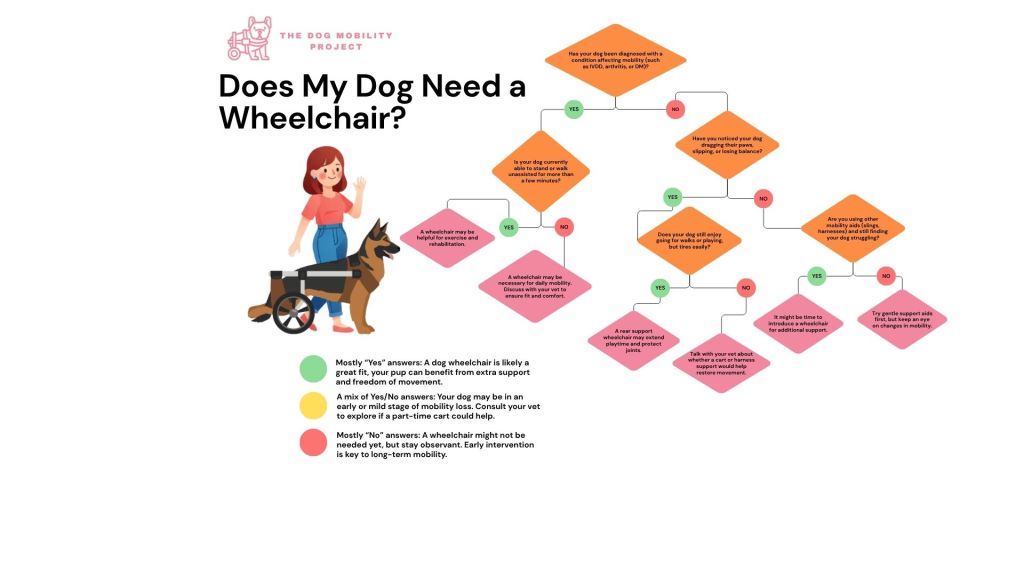
NTERACTIVE QUIZ: Does My Dog Need a Wheelchair?
(Use this interactive tool to help you decide!)
Life After the Wheels
Dogs adapt faster than we do. Once they’re fitted with a wheelchair, many start walking, running, and even playing fetch again within minutes.
A wheelchair doesn’t mean your dog’s journey is over—it means they’re ready for a new chapter. And with the right care, routine, and mindset, that chapter can be filled with joy, movement, and love.
We’re here to empower dogs to live life in motion. Whether your pup is adjusting to wheels for the first time or you’re exploring mobility aids, our mission is to guide you every step of the way.


 The Dog Mobility Project
Leave a comment