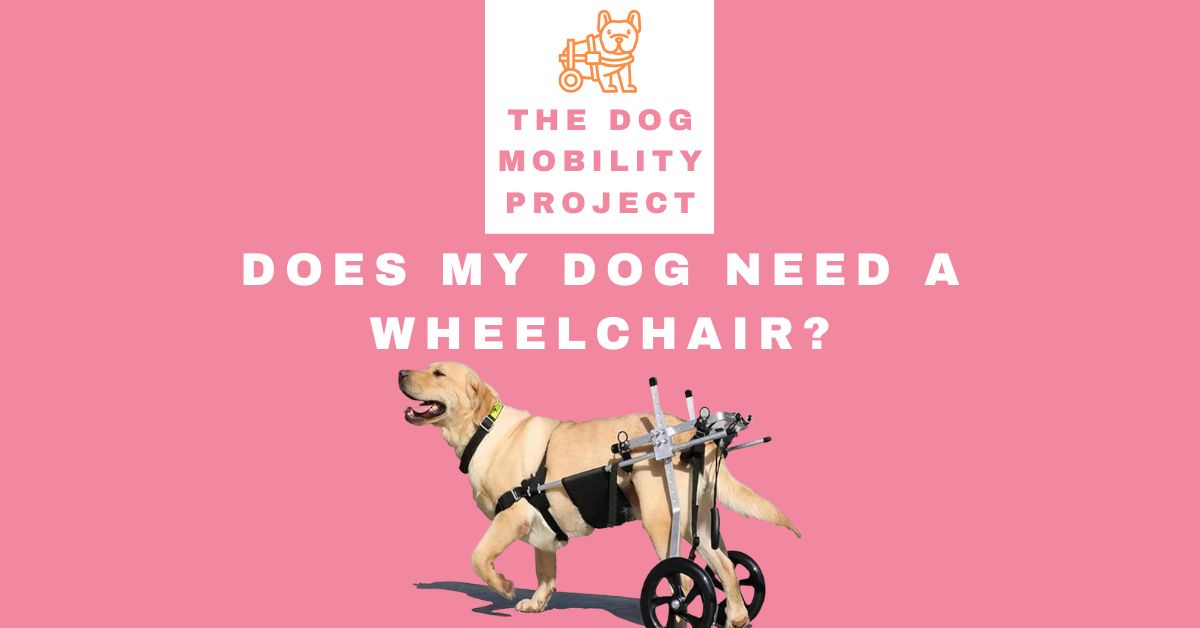
Quick Answer: Which Dogs Benefit from a Wheelchair?
Many dogs can benefit from a wheelchair when weakness, injury, paralysis, or neurological disease makes walking difficult. A wheelchair helps support the body while allowing many dogs to continue exercising, exploring, and enjoying daily life.
Conditions such as Degenerative Myelopathy (DM), Intervertebral Disc Disease (IVDD), hip dysplasia, arthritis, spinal injuries, and post-surgical weakness may all make a wheelchair an appropriate option. Some dogs use a wheelchair temporarily during recovery, while others rely on one long term to maintain their mobility and independence.
The decision to use a wheelchair should always be based on your dog’s diagnosis, strength, comfort, and overall quality of life—not simply their age.

When your dog starts slowing down, stumbling, or struggling to get around, it’s natural to wonder: Would a dog wheelchair help?
For many pet parents, it’s not an easy question to answer. Mobility loss can stem from many causes—injury, age, arthritis, or a neurological condition—and each dog’s journey is unique. But here’s the truth: a dog wheelchair isn’t a “last resort.” It’s a tool for independence, comfort, and quality of life.
At The Dog Mobility Project, we believe that movement is life—and every dog deserves the chance to stay active and happy, no matter their ability.
Signs Your Dog Might Need a Wheelchair
Many owners assume a dog must be completely paralyzed before a wheelchair becomes helpful. In reality, introducing a mobility aid before your dog loses all mobility can often improve confidence, reduce fatigue, and help preserve muscle strength.
Your dog may benefit from a wheelchair if they:
- Frequently stumble or fall
- Drag one or both rear paws
- Have weak back legs
- Tire quickly during walks
- Need help standing up
- Can no longer complete normal walks
- Lose balance on slippery floors
- Have difficulty keeping up with family activities
- Are recovering from surgery or a spinal injury
- Have a progressive neurological condition that continues to worsen
Every dog is different, but the goal of a wheelchair is to restore safe movement—not wait until mobility is completely lost. In many cases, a wheelchair can be used temporarily during recovery, or long-term to help dogs with progressive conditions maintain their freedom.
How a Dog Wheelchair Helps
Dog wheelchairs aren’t just for mobility—they’re for confidence and healing.
- Rehabilitation support: Some dogs use wheelchairs short-term after surgery or injury to prevent muscle atrophy.
- Exercise & mental health: Staying active helps reduce stress and keeps your dog’s mind sharp.
- Preventing injury: For dogs with balance or coordination issues, carts provide stability and reduce falls.
- Independence: Dogs who can move freely regain their joy—and often, their spark.
When NOT to Use a Wheelchair
There are times when a cart may not yet be the right fit.
You should talk with your veterinarian before using a wheelchair if your dog is:
- Still in the early stages of recovery and needs strict crate rest
- Experiencing pain, swelling, or open wounds that may worsen with mobility
- Unable to support any weight in their front legs (a specialized quad cart may be needed instead)
A wheelchair should always complement your vet’s care plan, not replace it.
NTERACTIVE QUIZ: Does My Dog Need a Wheelchair?
(Use this interactive tool to help you decide!)

Temporary vs. Long-Term Wheelchair Use
Not every dog who uses a wheelchair will need one forever.
Temporary Wheelchair Use
Some dogs benefit from a wheelchair while recovering from:
- Cruciate ligament (ACL/CCL) surgery
- Intervertebral Disc Disease (IVDD)
- Pelvic fractures
- Spinal injuries
- Neurological injuries
- Orthopedic surgery
During rehabilitation, a wheelchair may allow controlled exercise while protecting healing tissues and maintaining muscle strength.
Long-Term Wheelchair Use
Other dogs have progressive or permanent conditions that make long-term mobility support beneficial.
These include:
- Degenerative Myelopathy (DM)
- Permanent paralysis
- Severe spinal cord injuries
- Advanced neurological disease
- Congenital mobility disorders
- Limb amputations affecting balance
Many dogs using a wheelchair long term continue hiking, playing, swimming, and enjoying an active lifestyle.
How Veterinarians Decide if a Wheelchair Is Appropriate
Choosing a wheelchair isn’t based on a single diagnosis. Instead, veterinarians consider several important factors.
Your veterinarian may evaluate:
- Can your dog support weight on the front legs?
- Is your dog painful, or has pain been managed?
- Is the condition expected to improve or progress?
- Does your dog still enjoy walks and outdoor activities?
- Can your dog safely use the bathroom?
- Will increased mobility improve your dog’s quality of life?
- Are there other treatments that should be tried first?
These answers help determine whether a wheelchair is the right mobility solution—and when it should be introduced.
Which Type of Wheelchair Does Your Dog Need?
Different mobility challenges require different types of support.
| Mobility Challenge | Recommended Wheelchair |
|---|---|
| Weak or paralyzed rear legs | Rear-support wheelchair |
| Weak front legs | Front-support wheelchair |
| Weakness affecting all four legs | Quad (full-support) wheelchair |
| Temporary post-surgical recovery | Adjustable rear-support wheelchair |
| Progressive neurological disease | Adjustable wheelchair that can adapt over time |
Choosing the correct wheelchair is just as important as deciding whether your dog needs one in the first place.
Earlier Isn’t Giving Up
One of the biggest misconceptions about dog wheelchairs is that they should only be used as a “last resort.”
In reality, many veterinarians and canine rehabilitation specialists recommend introducing a wheelchair before mobility is completely lost.
Using a wheelchair earlier may help:
- Reduce fatigue during walks
- Encourage regular exercise
- Preserve muscle mass
- Improve confidence
- Prevent repeated falls
- Reduce frustration caused by limited mobility
- Maintain a better quality of life
A wheelchair doesn’t mean your dog has given up—it simply gives them another way to stay active while protecting their body.
Success Looks Different for Every Dog
Every dog’s mobility journey is unique.
Some dogs use a wheelchair for just a few weeks while recovering from surgery. Others continue using one for years while living with chronic neurological disease or permanent paralysis.
Success isn’t measured by whether your dog eventually walks without assistance. Success may mean:
- Enjoying daily walks again
- Exploring the yard independently
- Playing with family
- Maintaining muscle strength
- Remaining active despite a progressive disease
- Simply experiencing more comfortable, pain-free movement
The goal isn’t perfection. It’s helping your dog continue doing the things they love for as long as possible.
Frequently Asked Questions
Does my dog have to be paralyzed before using a wheelchair?
No. Many dogs begin using a wheelchair while they can still walk short distances. Early use can reduce fatigue, improve confidence, and help preserve muscle strength, allowing dogs to stay active longer.
Can a wheelchair slow muscle loss?
A wheelchair cannot stop muscle loss caused by neurological disease, but it can help many dogs remain active, maintain circulation, and continue exercising. Combining wheelchair use with physical therapy often provides the greatest benefit.
Is a wheelchair a permanent solution?
Not always. Some dogs only need a wheelchair during recovery from surgery or injury, while others use one long term to manage permanent or progressive conditions.
How do I know when it’s time?
Your dog may be ready for a wheelchair if weakness, fatigue, or repeated falls are limiting their ability to enjoy normal daily activities. Your veterinarian or rehabilitation specialist can help determine the right time to introduce a mobility aid.
Will my dog still enjoy walks?
Yes. Most dogs adapt quickly to a properly fitted wheelchair and are eager to explore once they realize they can move more comfortably. Many continue walking, playing, and spending time outdoors with their families.
Life After the Wheels
Dogs adapt faster than we do. Once they’re fitted with a wheelchair, many start walking, running, and even playing fetch again within minutes.
A wheelchair doesn’t mean your dog’s journey is over—it means they’re ready for a new chapter. And with the right care, routine, and mindset, that chapter can be filled with joy, movement, and love.
We’re here to empower dogs to live life in motion. Whether your pup is adjusting to wheels for the first time or you’re exploring mobility aids, our mission is to guide you every step of the way.
Related Articles





Leave a Reply