A Pet Parent’s Guide to Getting Started with a Dog Wheelchair
When your dog’s wheelchair arrives, it’s a moment filled with hope—and maybe just a little bit of nervous excitement. You’re doing something amazing for your best friend, but if you’re feeling unsure of what comes next, you’re not alone. Many pet parents feel overwhelmed at first, especially when there’s no one there to show them how to introduce this new mobility tool in person.
The good news? With a bit of preparation, patience, and positivity, you can help your dog adjust smoothly. Here’s everything you need to know when that box hits your doorstep.
Step 1: Unbox and Inspect
Before you assemble anything:
- Check that all parts have arrived. You should have a user manual, frame, wheels, harnesses, struts, and any custom parts specific to your pet’s build.
- Read through the instructions fully before starting. It’ll save time and prevent confusion.
- Lay everything out on a clean surface so you can easily see each component.
Step 2: Assemble the Wheelchair
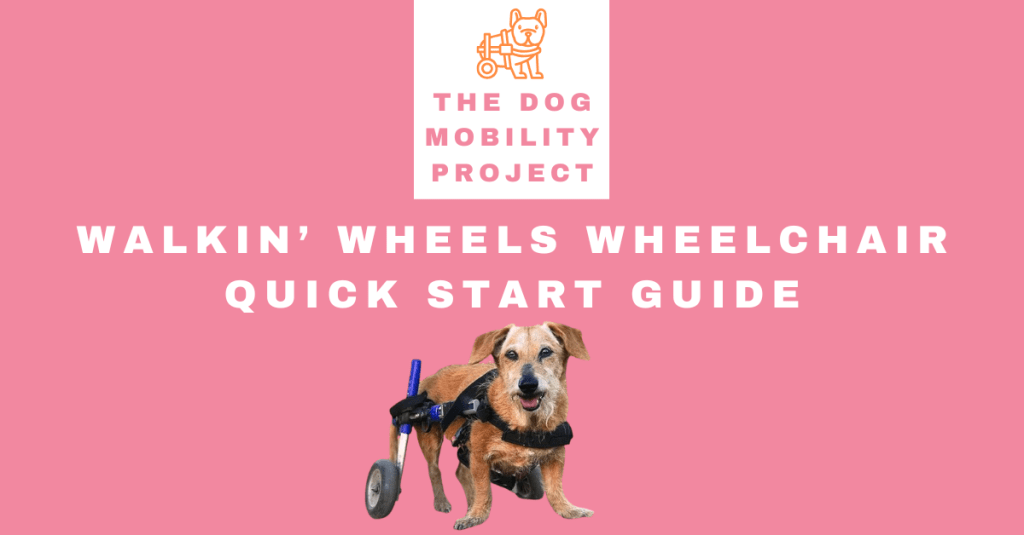
For Walkin’ Wheels Wheelchairs (Adjustable)
Walkin’ Wheels is designed to be adjustable and easy to assemble. Here’s a brief setup overview:
- Attach the wheels: The wheels will come attached to a silver strut, take these and lock them in place (in the wheelchair leg).
- Adjust height and length: The wheelchair frame slides and clicks into position using a push-button system similar to a crutch. You’ll adjust for your dog’s size using knobs and push buttons. When it’s properly adjusted, the black knuckle will sit at the center of your dog’s hip and the side bar should stop just behind your dog’s shoulder.
- Add the front harness and rear support rings: These padded harnesses keep your dog securely in place. Attach the leg rings to the wheelchair frame before you start. The front harness should be adjusted to fit your dog’s body before you attach them to the cart.
- Fit the leg rings: These form a sling for your dog’s hindquarters and should support without sagging too low or lifting your dog too high. The should be loosened enough to sit a few inches below the wheelchair frame to create a comfortable seat.
- Try it on: Gently place your dog into the wheelchair—rear legs go through the leg rings, and the front harness fastens around the chest.
📌 Tip: Take a picture of the fully assembled wheelchair and compare it with the manual to make sure it matches! Walkin’ Pets will also assess the wheelchair fit if you send them a photo of video.
🛠️ For K9 Carts (Custom-Built)
K9 Carts are built specifically for your pet’s measurements, so assembly is fairly minor. Your cart will come in two parts, the wheelchair frame and the wheels (with attached blades). Assembly may involve:
- Attach the wheels to the frame: Slide the wheel blades/wheels int the wheelchair frame and lock in place, the blade will protrude above the black block by a few inches.
- Check the frame alignment: Since it’s custom-fit, most pieces will already be in place or require minimal setup. But slight adjustments may need to be made for your dog’s comfort.
- Secure harnesses and leg slings: These are uniquely designed for your pet’s anatomy and comfort.
- Gently place your dog into the cart: Make sure weight is evenly distributed and nothing is rubbing.
📌 Tip: If you’re unsure, many custom cart manufacturers offer virtual fitting appointments or email/phone support. Don’t hesitate to reach out!
Step 3: Let Your Dog Get Comfortable
Don’t rush it. Your dog may not understand what the wheelchair is at first. Here’s how to ease them into it:
- Introduce it slowly – Let your dog sniff and investigate the wheelchair before putting them into it.
- Practice without moving – Harness them in and let them stand still for a few minutes at a time.
- Short sessions – Start with 5–10 minutes of supervised walking, gradually increasing time as they gain strength and confidence.
- Use treats and praise – Make the experience positive. Celebrate small wins!
- Watch for signs of fatigue or discomfort – Adjust straps and alignment as needed. If anything seems off, consult the manufacturer or your vet.
Step 4: Monitor, Adjust, and Celebrate
As your dog begins using their wheelchair:
- Check the fit regularly—dogs can lose or gain weight, or changes in health may affect how the cart fits.
- Clean the wheelchair often, especially if your dog is active outside.
- Don’t forget mental and emotional support—encourage playtime and interaction just like before.
Most importantly: give yourself grace. Learning something new together takes time. But that moment your dog takes their first few steps with confidence? It’s worth everything.





 The Dog Mobility Project
Leave a comment