
It’s a moment many pet parents anticipate with both hope and nerves: the first time their dog tries on a wheelchair. You’ve researched, measured, ordered the right fit, and now… your dog wants nothing to do with it.
You’re not alone. While dog wheelchairs can be life-changing tools for mobility, freedom, and quality of life, not every dog takes to them right away. Some resist. Others shut down. And for anxious or strong-willed pets, the introduction of mobility equipment can feel overwhelming. But take heart—adaptation is possible. It just takes patience, empathy, and the right strategy.
Why Dogs Might Reject a Wheelchair
Dogs communicate their discomfort in many ways—freezing, refusing to move, whining, or actively trying to escape the device. Here’s why they might react that way:
- Fear of the unknown: New sights, sounds, and sensations can be scary. The click of the harness, the rumble of the wheels—these unfamiliar experiences can trigger fear.
- Sensory overload: For sensitive dogs, wearing a wheelchair might feel like a sensory storm at first. The harness may feel restrictive, the wheels clunky.
- Loss of control: Dogs with strong personalities may feel frustrated when they can’t move exactly how they used to.
- Pain association: If the dog is still in discomfort or recovering from an injury, they may associate the wheelchair with pain or past trauma.
- They sense your stress: Dogs are intuitive, if you’re anxious or frustrated they are going to pick up on it. If you feel yourself getting stressed or upset while you set up the cart or try to get your dog into the wheelchair, they may resist and become fearful. Take a break and try again another day when you’re in a better headspace.
Step-by-Step: Helping Your Dog Adapt
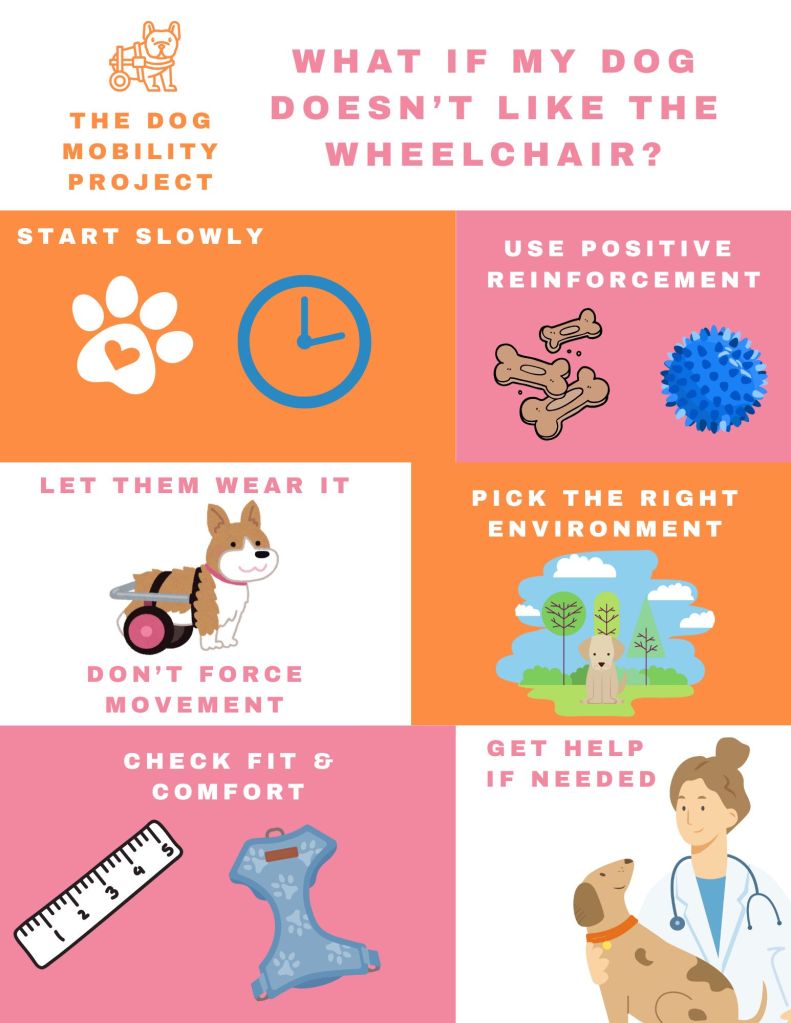
1. Start Slow—Very Slow
The biggest mistake is trying to go too far, too fast. Instead, break the introduction into manageable steps:
- Let your dog see and smell the wheelchair before putting it on.
- Offer treats and praise whenever they approach or sniff it.
- Once they’re calm around it, try placing it next to them, then eventually attach it gently without expecting movement.
2. Practice Wearing It Without Movement
Let your dog wear the wheelchair in a calm space. Don’t expect them to walk right away. Start with a few minutes, even if its just them standing in the wheelchair, then build up time gradually. Feed meals or give their favorite toy during this time to build a positive association.
3. Harness the Power of Positive Reinforcement
Treats, praise, affection, play—whatever motivates your dog, use it. Pair every interaction with the wheelchair with something they love. You’re teaching them that “wheelchair = good things.”
4. Pick the Right Environment
Avoid overwhelming your dog with new experiences and a new device at the same time. Start indoors on a non-slip surface or in your backyard. Keep it quiet and relaxed. Then slowly move to different areas. Avoid busy parks or new places until your dog is more confident. Using their wheelchair is a completely new experience in itself, don’t push your dog too much on their first couple of wheelchair trials. Hold off on taking that long walk until your dog is really comfortable.
5. Don’t Skip a Vet Check
If your dog shows signs of distress or pain while in the wheelchair, double-check the fit and talk to your vet. Pain, pressure sores, or underlying issues might make movement uncomfortable. A mobility aid should never hurt, but the wheelchair will place pressure on different points of your dog’s body, some of which may be areas where your dog already hurts. Check to make sure the wheelchair is fitted correctly and isn’t accidentally placing pressure on any painful areas on your dog’s body.
6. Work With a Trainer or Rehab Specialist
Some dogs need extra help. A certified dog trainer, especially one with experience in mobility or fear-based behaviors, can help desensitize your pet and easy the adjustment period. Canine rehab specialists (physical therapists for dogs) are also excellent allies.
Special Tips for Stubborn or Anxious Dogs
- Use scent or calming sprays like Adaptil to reduce stress.
- Keep sessions short and end on a win—even one paw forward is progress!
- Stay calm and confident. Dogs mirror our emotions. If you’re anxious, they will be too.
- Never force movement. Dragging a fearful dog in a wheelchair can cause lasting trauma. Let them decide when to try.
Remember: Adaptation Takes Time
Some dogs adjust within hours. Others need days or even weeks. That’s okay. The goal isn’t speed—it’s confidence and comfort. Your dog may never race through the yard again, but even short, supported strolls can bring joy and enrichment.
You’re Not Failing—You’re Learning Together
If your dog doesn’t immediately love the wheelchair, don’t see it as failure. You’re helping them adjust to a whole new way of moving through the world. And like all important things in life, it takes time, trust, and love.
Your dog looks to you for guidance. With patience and support, you can help them not only tolerate their wheelchair—but embrace the freedom it brings.




 The Dog Mobility Project
Leave a comment