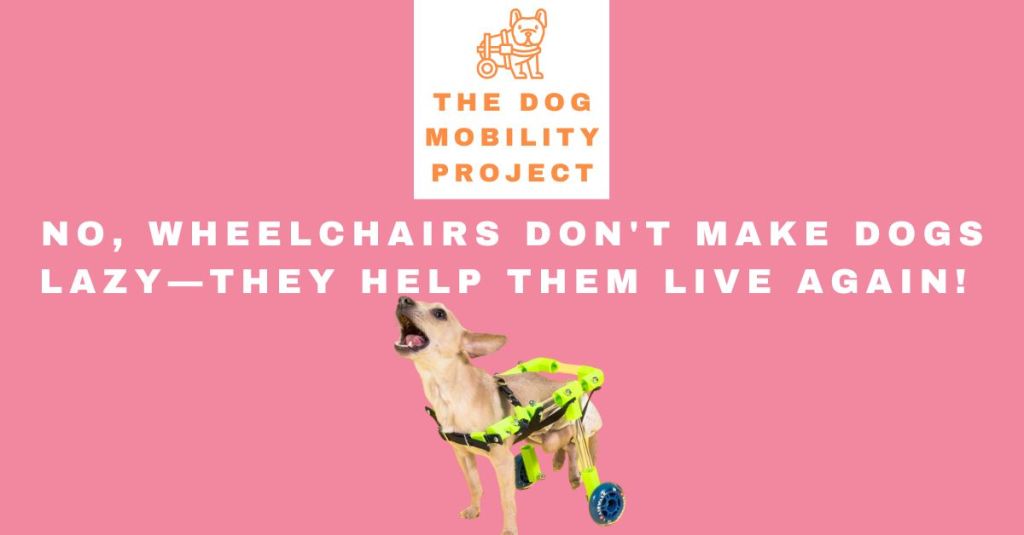
Dispelling a Harmful Myth and Empowering Pet Parents to Advocate for Mobility
If you’ve been told that putting your dog in a wheelchair will make them lazy, you’re not alone—and you’re not wrong to question that advice. The idea that mobility aids somehow weaken dogs or prevent recovery is outdated and, frankly, harmful.
Let’s be clear: wheelchairs don’t make dogs lazy—they make them mobile.
Where This Myth Comes From
Some veterinarians and well-meaning individuals believe that introducing a wheelchair too soon might reduce a dog’s desire to “try harder” in rehab or build strength on their own. It stems from a long-standing (but oversimplified) idea that assistive devices = giving up.
But that couldn’t be further from the truth. Mobility isn’t a reward for progress. It’s the key to making progress.
The Reality: Movement is Motivation
Dogs are not humans. They don’t pretend to need help when they don’t, and they certainly don’t “fake” injuries or stop trying just because a device makes life easier. In fact, the opposite is true.
Here’s what actually happens when a dog is introduced to a wheelchair:
- They perk up. Dogs who’ve been lying around depressed or frustrated suddenly light up when they realize they can move again.
- They get exercise. Using a wheelchair keeps the front limbs strong and often allows the back limbs to move in a natural walking rhythm—helping with circulation and muscle tone.
- They heal better. For dogs recovering from surgery or injury, controlled movement can help prevent atrophy and pressure sores, while boosting mental health.
Wheelchairs aren’t a last resort—they’re a tool for healing, independence, and joy.
What to Do If Your Vet Tells You Otherwise
First, take a breath. Most vets mean well, but not all are trained in rehab or mobility support. Some may not have firsthand experience with wheelchairs or may base their opinions on outdated info.
Here’s how to respond constructively:
- Ask Questions:
- “Can you help me understand why you feel a wheelchair would be harmful?”
- “Are there specific rehab goals we could work on while using a wheelchair?”
- “Is your concern based on my dog’s specific condition, or a general approach to mobility aids?”
- “Are there risks you’re seeing that I should be aware of if we don’t support their mobility soon?”
- “What signs should I watch for to know if my dog is ready—or not ready—for a wheelchair?”
- “Could we use the wheelchair as part of a larger rehab plan?”
- “Are there safe ways to alternate between the wheelchair and physical therapy to support both movement and muscle building?”
- Seek a Second Opinion:
Reach out to a rehab specialist or a vet familiar with mobility devices. Many can do virtual consultations and evaluate your dog’s condition remotely. - Do Your Research—and Share It:
Bring studies, success stories, and veterinary rehab perspectives with you. Sometimes minds can change with the right information. - Trust What You See in Your Dog:
You know your dog better than anyone. If they’re struggling to move and you see them light up in a wheelchair, that speaks volumes.
Mobility Is Not a Luxury—It’s a Right
Every dog deserves the chance to move, explore, and engage with their world—regardless of age or injury. Denying them that chance out of fear they’ll “get lazy” not only limits their potential, it risks their quality of life.
A wheelchair isn’t a crutch—it’s a bridge to freedom.
Final Thoughts
The Dog Mobility Project exists to challenge these kinds of myths and provide compassionate, evidence-based guidance. If you’re facing resistance to mobility aids, know you’re not alone—and you can advocate for your dog.
Because when a dog moves, life moves with them.




 The Dog Mobility Project
Leave a comment