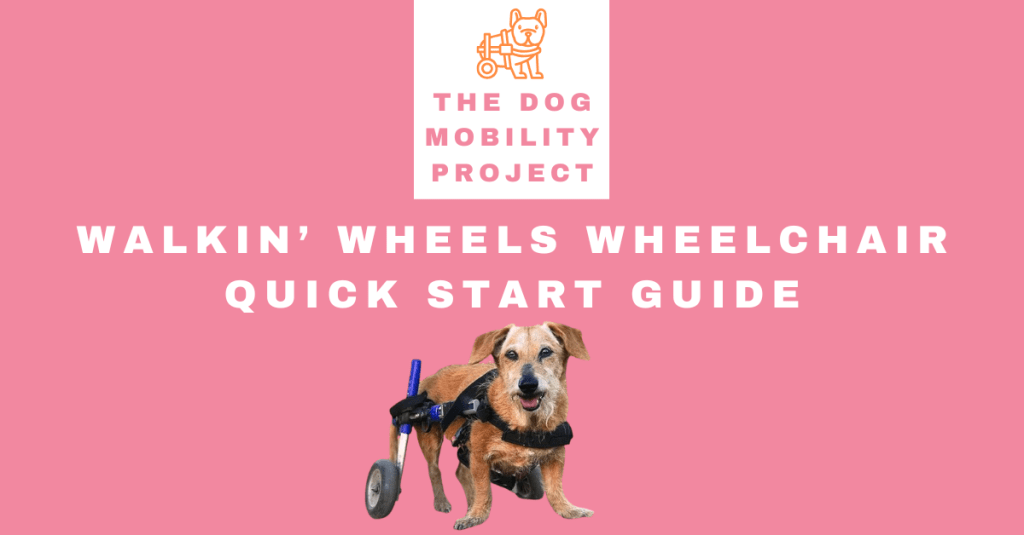
A dog wheelchair can look intimidating at first—but setup is simple, and most dogs adapt quickly. Follow these steps to get your dog moving safely and comfortably.
1) Assemble the Frame
- Connect the side bars or arms to the wheelchair frame.
- Attach the wheels (with the struts) to each side, with the wheel facing outwards.
- Adjust the length so the wheels sit inline with your dog’s hips and the side bars sit behind your dog’s front arms.
- Adjust the height so that your dog can touch the ground comfortably.
Keep it simple: Start by eyeballing the settings—you can fine-tune later.
2) Add the Leg Rings
- Attach the rear support saddle (or leg rings) to the frame. These attach in four silver pegs, two on each side. When attached, the legrings should form two C’s (if they look like V’s, rotate them 90 degrees and reattach).
- Adjust the straps so they’re snug but not tight. They should dip below the wheelchair frame to create a seat.
- Make sure nothing rubs or pinches the skin.
Rule of thumb: Your dog should be sitting comfortably in the chair, not sitting above it.
3. Put the Front Harness on Your Dog
- Place the front harness on your dog with the blue strap facing up. The chest strap should sit comfortably on your dogs front, with the red strap going under the behind (behind the front legs).
- Adjust each strap for comfort; it should fit snugly but not dig into your dog.
- When ready clip the harness into each side bar of the cart.
Rule of thumb: You should be able to slip two fingers under any strap.
4) Place Your Dog in the Wheelchair
- Calm your dog and offer treats.
- Lift the rear legs and clip the front harness into place.
- Secure all straps and buckles.
- Let your dog stand and get used to the feel.
First sessions should be short—just a few minutes
5) Adjust for Comfort
Fine-tune the wheelchair so your dog moves naturally:
- Height: Rear should be lifted just enough to support weight, with their toes still able to touch the ground.
- Length: Wheels should sit slightly in line with the hips.
- Balance: Dog should not tip forward or backward.
If your dog leans forward, shorten the frame.
If they tip backward, lengthen it.
6) Start Moving
- Encourage your dog with treats, toys, or a walk outside.
- Start on flat, familiar ground.
- Keep first walks short (5–10 minutes).
Most dogs learn within minutes. Confidence builds fast.
7) Safety & Care Tips
- Never leave your dog unattended in the wheelchair.
- Check for skin irritation after each use.
- Remove the wheelchair for rest and sleeping.
- Clean straps and frame regularly.
When to Ask for Help
Contact a veterinarian or mobility specialist if:
- Your dog refuses to move after multiple attempts
- You see sores or redness
- Your dog seems uncomfortable or stressed
- You’re unsure about sizing or adjustments
You’re Not Alone
A wheelchair doesn’t limit your dog, it restores freedom. Many dogs run, play, and explore again once they adapt.
Mobility is not the end of a dog’s story. It’s a new chapter.




 The Dog Mobility Project
Leave a comment