A Complete Sizing Guide for Pet Parents
Choosing the right wheelchair height for your dog is one of the most important factors in comfort, mobility, and safety. A wheelchair that’s too tall can strain your dog’s joints and spine, while one that’s too short can drag, cause poor posture, and reduce mobility.
If you’re asking, “How tall should my dog’s wheelchair be?” this guide will walk you through exactly how to measure your dog, what the ideal height should be, and common mistakes to avoid.
Why Wheelchair Height Matters for Dogs
Dog wheelchairs are designed to support a dog’s hind legs, front legs, or all four limbs, depending on their mobility needs. The height of the wheelchair frame determines your dog’s posture, gait, and comfort.
A properly sized wheelchair should:
- Keep your dog’s back level and spine aligned
- Allow natural movement of the legs and joints
- Prevent pressure points and rubbing
- Help your dog move comfortably without strain
- Allows the wheelchair to fully support your dog’s weight
The Ideal Height for a Dog Wheelchair (Quick Answer)
In most cases, your dog’s wheelchair should be adjusted so their back is level and their paws are lightly touching the ground (if they still have some mobility). Typically, the point where the wheel meets the wheelchair frame should sit in the center of your dog’s hip while your dog is standing.
For rear-support wheelchairs, the general rule is:
- The wheelchair height should match the height of your dog’s groin (or rear support point) from the ground.
For front or full-support wheelchairs:
- The height should match the chest or shoulder height, depending on the design and where the harness supports your dog.
How to Measure Your Dog for Wheelchair Height
1. Measure the Rear Height (for Hind Leg Wheelchairs)
- Some manufacturers will have your dog stand naturally (if possible) on a flat surface. I recommend measuring your dog while it’s lying on the ground. Keep the back leg in a natural standing position (do not stretch the leg) as you measure. Dogs with weak back legs may not be able to stand to their fullest, which may cause a standing measurement to be too short.
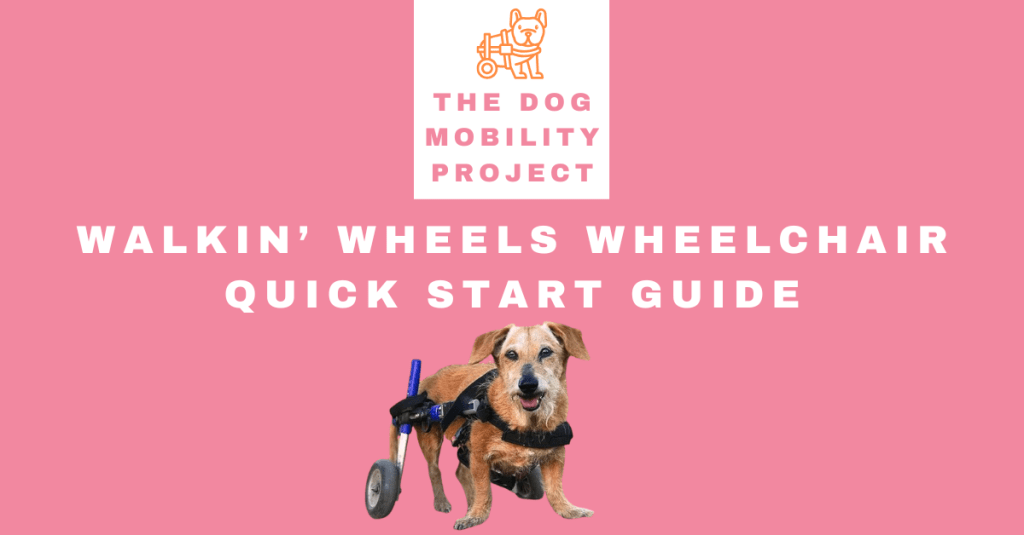
- Measure from the ground to the top of your dog’s groin area (where the harness will sit). The Walkin’ Wheels wheelchair (my favorite cart) asks for a FOF measurement, which is from the bottom of your dog’s paw, up to where the upper leg meets the body. To find the “fold”, look for the crease of skin at their upper leg (similar to the skin between your thumb and forefinger) and measure to that point.
- This measurement determines the frame height of the wheelchair.
2. Measure the Front Height (for Front or Full-Support Wheelchairs)
- Measure from the ground to the top of your dog’s shoulder blades or chest support point.
- This ensures the front support keeps your dog upright and balanced.
Truthfully, most wheelchair companies will just ask you to measure the back leg since it will give you the same height and is often easier to measure on your own.
3. Measure While Lying Down (If Your Dog Can’t Stand)
If your dog can’t stand (and even if they can, I prefer this method):
- Measure while they’re lying on their side
- Gently extend their legs into a natural standing position
- Measure from the ground to the same support points (groin or chest)
How High Should the Wheels Be Off the Ground?
The wheels should be positioned so that:
- Your dog’s body is supported but not lifted too high
- The paws can touch the ground if your dog still uses them
- The spine remains straight and level—not arched or sagging.
If your dog is fully paralyzed in the hind legs, their paws may not touch the ground, but the frame should still keep their body level and balanced.
Signs Your Dog’s Wheelchair Is Too Tall or Too Short
🚩 Too Tall
- Your dog’s back arches upward
- Their paws barely touch the ground or dangle
- They appear tense or uncomfortable
- Difficulty starting or stopping movement
- The back is sloping downwards, with the hind end sitting higher than the front end.
- Dog can barely touch the ground or strains to make their feet touch
🚩 Too Short
- The frame drags on the ground (this one’s pretty obvious), but also look for a slope in your dog’s back with their hind end sitting lower than the front.
- Your dog’s back slopes downward
- Harness straps rub or cause pressure points
- Limited movement or stumbling, dog pushes backwards instead of stepping forward.
- Back legs are bent
Ideally, when adjusted correctly, your dog should be standing at their natural height. The wheelchair should provide them with enough support so your dog’s posture matches their normal stance. The back legs should be straight, not bent or hunched.
Can Wheelchair Height Be Adjusted?
Most high-quality adjustable dog wheelchairs offer a range of adjustability in height, length, and width for each size cart. This is important because:
- Dogs gain or lose muscle over time
- Puppies and younger dogs grow
- Rehabilitation progress can change posture and support needs
Adjustable wheelchairs allow you to fine-tune the height for comfort and recovery. A custom wheelchair will be sized for your dog’s specific (and current) measurements only. If your dog grows taller or gains weight, the custom wheelchair may need to be sent back to the retailer for adjustments, or you may need to purchase a new cart.
Tips for Getting the Perfect Fit
- Measure twice and use a flexible tape measure
- Measure when your dog is calm and relaxed
- Ask your veterinarian or rehabilitation specialist for guidance
- Start slightly lower and adjust upward as needed. Monitor for rubbing, sores, or changes in posture
- If you (or your dog) seem stressed, stop and take a break before measuring again.
Frequently Asked Questions
How tall should my dog’s wheelchair be for a paralyzed dog?
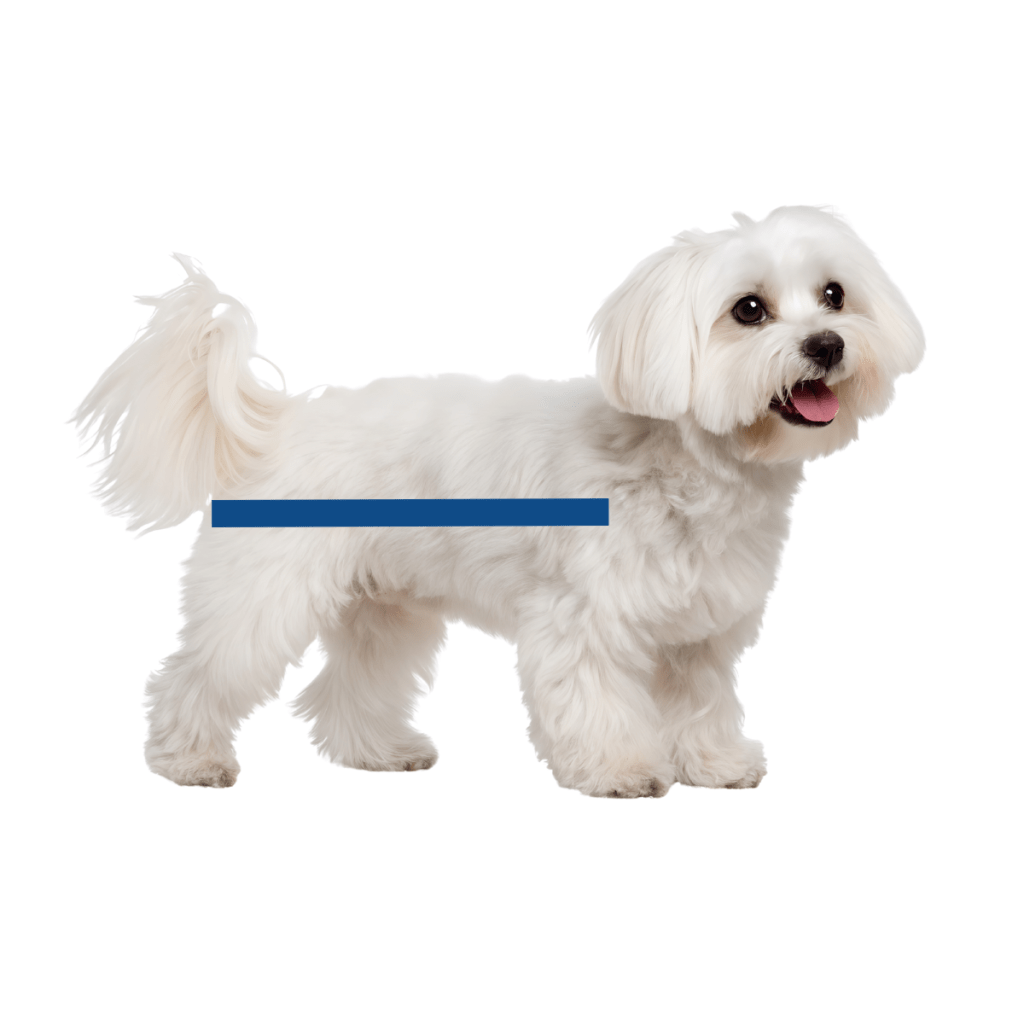
The wheelchair should keep your dog’s back level and body supported. The right height varies by dog and is directly affected by your dog’s size. Their paws should lightly touch the ground (if they can walk), but the height should be high enough to prevent dragging and maintain spinal alignment.
See the image to the left. When adjusted correctly, the frame of the wheelchair should be parallel to the ground and be centered (in line) with your dog’s torso. If the wheelchair frame is below the center
Can I use a dog wheelchair that’s slightly too tall?
A slightly adjustable wheelchair can be lowered, but a fixed wheelchair that’s too tall can cause discomfort, poor posture, and long-term joint issues.
Below are two examples of what a dog’s wheelchair might look like if it is too tall. In the first photo, the wheelchair frame sits above the dog, but the dog’s back is aligned. In the second photo, you’ll see a classic example of a dog in a wheelchair that is much too tall for them, with the wheelchair sloping down in front.
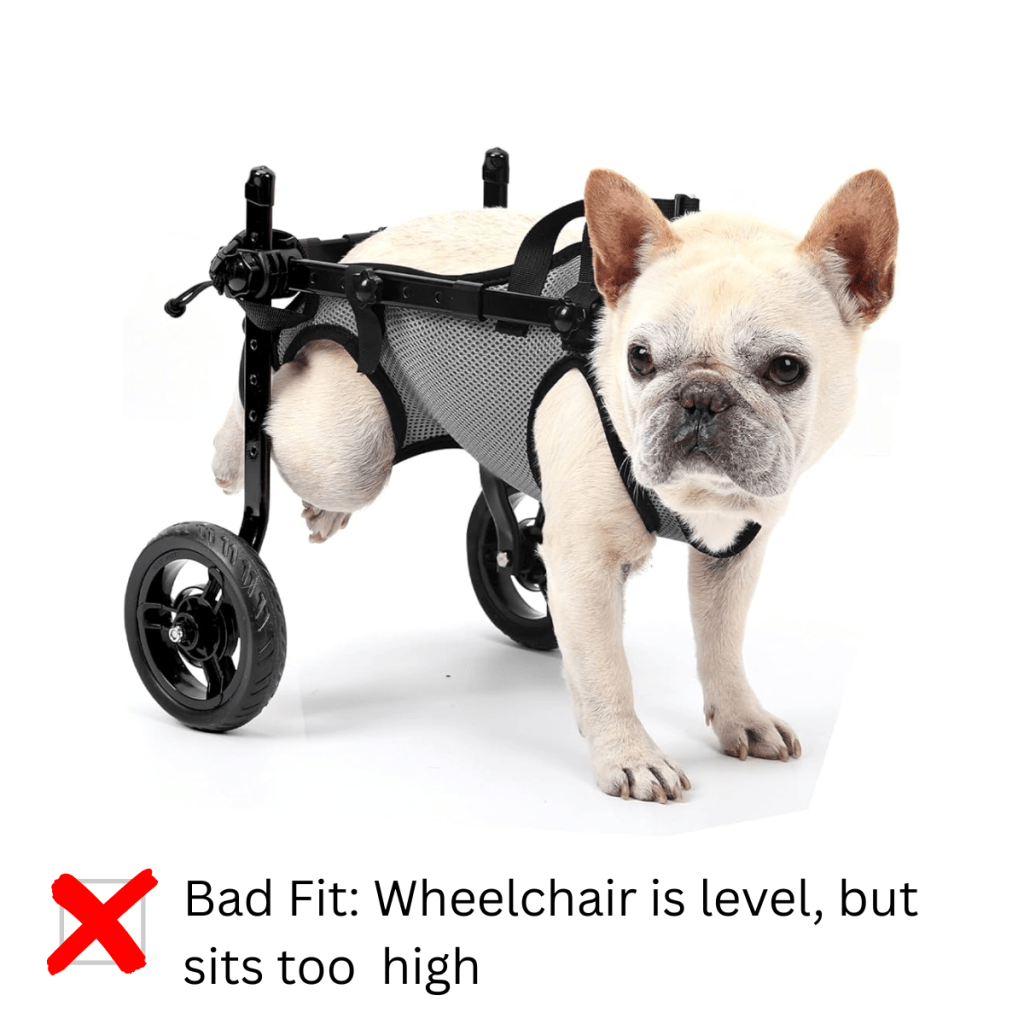
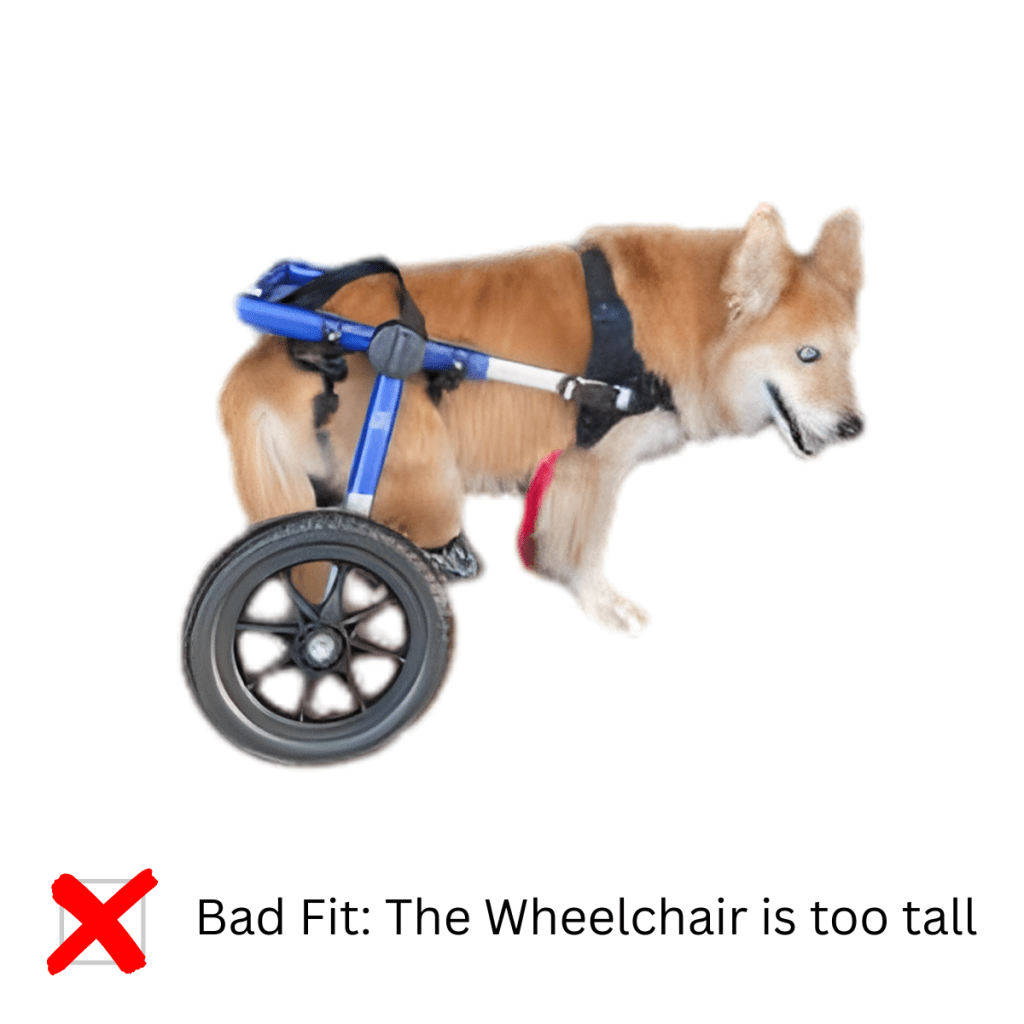
In the first example, the dog is hanging below the wheelchair, which means it is not properly supporting them. In the second example, too much strain is being placed on the front legs. In both, the dog likely won’t be comfortable and may find it more difficult to walk.
Should my dog’s feet touch the ground in a wheelchair?
If your dog has some mobility, yes—light paw contact helps with balance and muscle engagement. Fully paralyzed dogs may not touch the ground, and that’s okay. Paralyzed dogs should lift their paws off the ground slightly to prevent rubbing or scrapes from dragging feet.
Final Thoughts: Finding the Right Wheelchair Height for Your Dog
The right wheelchair height can dramatically improve your dog’s comfort, confidence, and quality of life. A properly fitted wheelchair keeps your dog aligned, supported, and ready to explore the world again.
If you’re unsure about measurements, consult your veterinarian, a canine rehabilitation specialist, or a mobility equipment expert for personalized guidance.

 The Dog Mobility Project
Leave a comment