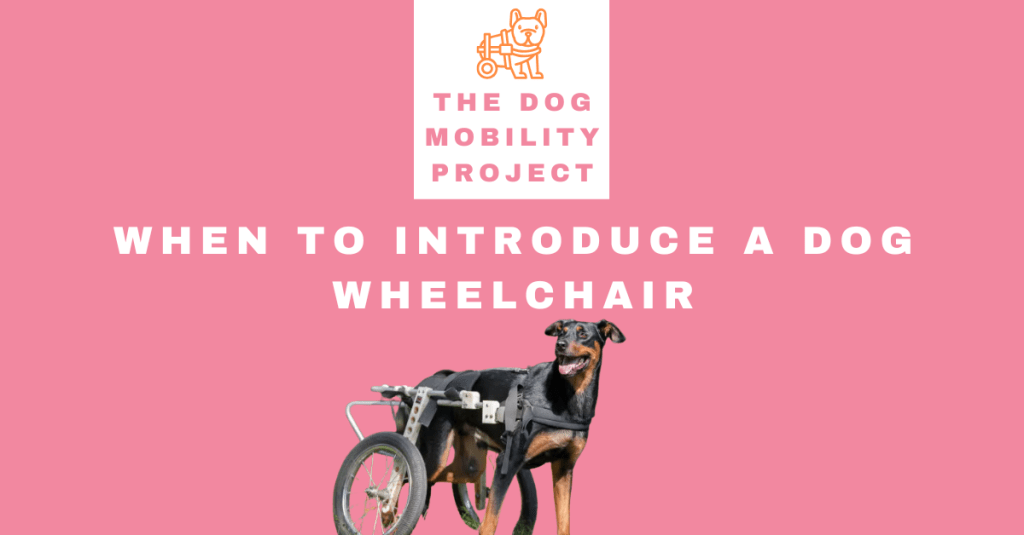
As dogs age or develop neurologic or orthopedic conditions, mobility challenges can significantly compromise quality of life. A dog wheelchair (also known as a canine mobility cart) can be an effective tool to preserve independence, reduce pain, and promote overall well-being. However, knowing when to introduce a wheelchair and how to tailor mobility support to specific diagnoses isn’t always straightforward. When it comes to dog wheelchairs, there isn’t much information available, and because every dog’s needs and condition are different, what exists may not apply to your dog. So how do you know what’s right for your best friend?
This article provides an evidence-based, diagnosis-specific guide to help you determine the right time for a dog wheelchair, what to expect, and how to ensure a successful transition for your pet.
Why Timing Matters: Benefits of Early vs. Late Introduction
When is the right time to get my dog a wheelchair? The truth is, the right time might be much sooner than you think. Getting your dog into a wheelchair early on is incredibly beneficial. Using a dog wheelchair early on in your dog’s mobility loss journey can:
- Preserve muscle tone and joint range of motion
- Prevent secondary injuries (scraping paws, joints overcompensating)
- Minimize compensatory pain in hips, shoulders, and spine
- Enhance confidence and mental health
- Reduce caregiver strain
Waiting too long can lead to:
- Atrophy of supporting musculature
- Increased load on unaffected limbs (possibly injuring a previous healthy limb from overuse)
- Greater reluctance to use mobility aids later
The goal is functional support, not surrender, early enough to aid but not so early that the dog never attempts natural ambulation when able. Which is a really fancy way of saying, get your dog started with a wheelchair when you start to notice a decline in their mobility. Don’t wait until they’re dragging themselves around.
General Signs Your Dog May Need a Wheelchair
Regardless of diagnosis, consider a wheelchair if your dog shows:
Mobility Indicators
- Frequent stumbling or falling
- “Bunny hopping” with hind limbs
- Dragging paws
- Difficulty rising from lying down
- Reluctance to walk more than a few steps
- Loss of coordination (ataxia)
Behavioral and Quality of Life Indicators
- Signs of frustration or anxiety when mobility decreases
- Avoidance of walks or play
- Weight gain from reduced activity
- Sores or calluses from dragging
If you notice these patterns, discuss mobility aids with your veterinarian early — not just as a last resort.
Deciding if a Wheelchair is Right for Your Dog’s Diagnosis
Intervertebral Disc Disease (IVDD)
Overview: IVDD is a spinal condition where discs protrude or rupture, compressing the spinal cord. It’s common in Dachshunds, Beagles, Cocker Spaniels, and other chondrodystrophic breeds.
When to Introduce a Wheelchair
- Post-acute injury: After stabilization and pain control, a wheelchair can help preserve quality of life during recovery.
- During chronic progression: If hind limb strength is inconsistent, using a wheelchair for longer distances reduces fatigue and risk of re-injury.
- After surgery: Once cleared by surgery follow-up assessment and basic core strength is regained, a wheelchair aids in gradual rehabilitation.
Key Considerations
- Work with a rehab specialist to assess core strength before reliance
- Start with supervised, short sessions
- Pair wheelchair use with physical therapy
- Don’t replace crate rest with a wheelchair; crate rest is a vital part of IVDD recovery
Degenerative Myelopathy (DM)
Overview: DM is a progressive spinal cord disease most common in German Shepherds, Boxers, and other large breeds. It causes gradual loss of coordination and strength in the hind limbs.
When to Introduce a Wheelchair
- Early mobility loss: As soon as hind limb weakness becomes consistent, a wheelchair supports independence and slows secondary compensation injuries.
- Before dragging occurs: Earlier introduction preserves conditioning and confidence.
Key Considerations
- DM is progressive, wheelchair needs will increase over time
- Frequent reassessment of fit and support level is essential
- Comfort features (padded harnesses, adjustable support) improve tolerance
- Every dog with DM will need a wheelchair, since the condition will worsen, make sure the wheelchair can be easily adapted to a four-wheel wheelchair for full body support later on
Hip Dysplasia & Osteoarthritis
Overview: These common orthopedic issues in large and active breeds cause pain, inflammation, and reduced range of motion.
When to Introduce a Wheelchair
- Pain-related gait changes: If limping, reluctance to bear weight, or avoidance of activity are present.
- Activity reduction: If traditional pain management and physical therapy no longer sustain comfortable movement.
Key Considerations
- A wheelchair is a supplement to medical management, not a replacement
- Use during longer walks or uneven terrain to reduce joint stress
- Dogs with hip dysplasia and arthritis generally do not require a wheelchair full time, they may use their cart only on bad days or during prolonged exercise.
Spinal Injuries and Paralysis
Overview: Trauma, slipped discs, or acute neurologic events can cause partial or complete paralysis.
When to Introduce a Wheelchair
- After stabilization: Once acute inflammation is under control and the neurologic status is evaluated.
- As a long-term support: If recovery plateaus and voluntary movement is limited.
Key Considerations
- Follow your vet’s guidance; spinal injuries are tricky, and using a wheelchair should only start after your dog has been cleared for exercise.
- Work with your vet to ensure skin integrity and pressure-relief measures are in place. A special mid-body sling can be added to the cart to support your dog’s entire back.
- Transition slowly; begin in low-distraction environments
Senior Dogs
Overview: Aging alone can reduce strength and coordination.
When to Introduce a Wheelchair
- Functional plateau: When your dog’s mobility declines despite proper nutrition, joint supplements, and low-impact exercise.
- Safety first: If falls increase or stamina drops significantly.
Key Considerations
- Assess for cognitive decline or sensory loss (vision/hearing) that may affect wheelchair acceptance
- Consider low-impact alternatives (e.g., slings, harnesses) in the early stages.
How to Choose the Right Wheelchair
Selecting the appropriate wheelchair involves:
- Accurate measurements (height, length, girth)
- Breed-specific considerations (front vs. rear support)
- Adjustable features for growth or progression
- Padding and comfort
- Easy access for toileting and rest
Professional fitting (by a veterinary rehabilitation or mobility specialist) improves outcomes and compliance. The best time to introduce a cart to your dog is a conversation to have with your vet. Many factors can influence the decision and should be considered before you start. Always consult a veterinary professional for guidance on the decision. In my experience, rehab professionals have the best understanding of dog wheelchairs and can help you to safely introduce a cart into your dog’s recovery.
Introducing Your Dog to a Wheelchair: Step-by-Step
- Familiarization – Let your dog inspect the equipment off the body first.
- Harness Fit – Ensure snug but comfortable fit; check for pinching or rubbing.
- Short Sessions – Begin with 5–10 minutes on a flat surface.
- Positive Reinforcement – Treats, praise, and gentle encouragement.
- Supervised Practice – Never leave unattended in early stages.
- Incremental Increase – Extend duration and terrain complexity slowly.
Common Misconceptions
Myth: Wheelchairs make dogs lazy.
Fact: Properly introduced wheelchairs enhance activity and prevent compensatory injuries. If a dog recovers enough that they can get around without a cart, nothing is going to stop them. Using a wheelchair to support them will not stop them from trying to get around without it. Think of the cart as a tool they can use when needed, not something that’s going to hold them back.
Myth: Only paralyzed dogs need wheelchairs.
Fact: Dogs with weakness, pain, or stamina loss benefit at many stages. Wheelchairs are used for many reasons; paralysis is just one of them.
Myth: A wheelchair cures the condition.
Fact: A wheelchair isn’t a cure-all. It supports function and quality of life but does not reverse the underlying disease.
FAQs
Q: How long do dogs take to adapt?
Most dogs show comfort and coordination improvements within days to a few weeks with consistent, positive practice.
Q: Will it make my dog dependent?
When combined with appropriate therapy and activity, wheelchairs complement natural movement rather than create dependency. If your dog eventually recovers enough leg strength and can support its own weight again, it will walk whether its using a wheelchair or not.
Q: Can all dogs use wheelchairs?
Not all conditions or temperaments are suited. A professional assessment improves success rates. Dogs whose strength and condition have progressed to the point where they’re too weak may be too far gone to use a cart. As a general rule of thumb, dogs need enough front leg strength to be able to steer their cart and propel themselves forward, otherwise, their wheelchair acts more as a stand to keep them upright and less of a mobility aide.
Measuring Success: Quality of Life Indicators
Monitor:
- Increased voluntary activity
- Improved mood and engagement
- Fewer stumbles or falls
- Maintained or improved muscle tone
- Reduced secondary soreness
If these indicators improve, the wheelchair is likely benefiting your dog. If your dog is in pain or is too weak to move, they might not have the best quality of life.
Conclusion
A dog wheelchair can be transformative, but the when matters. Early intervention tailored to your dog’s specific diagnosis, combined with mindful introduction and support, maximizes independence and comfort. Whether your dog has IVDD, degenerative myelopathy, arthritis, or age-related weakness, informed timing and professional guidance will help you make the best mobility decision for your best friend.



 The Dog Mobility Project
Leave a comment