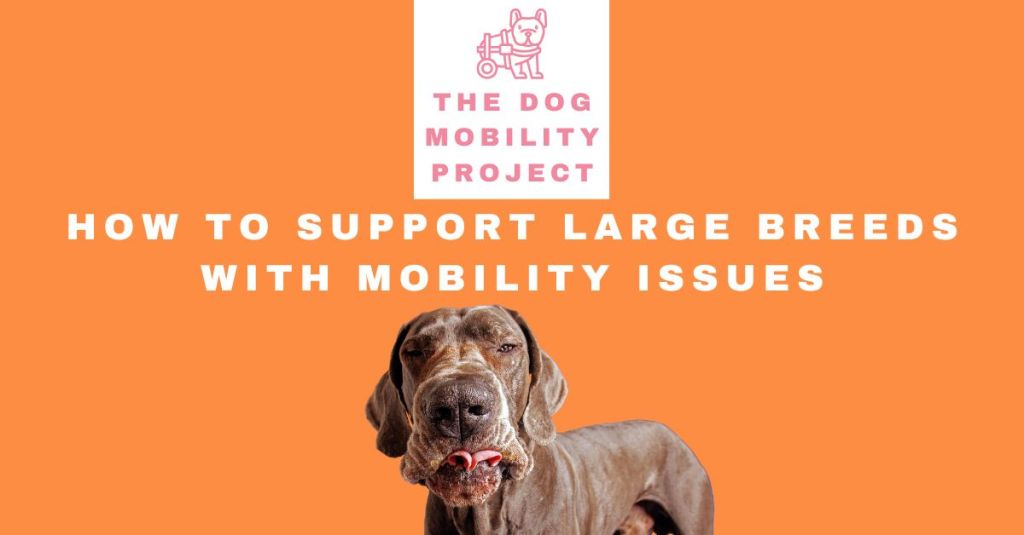
Giant dog breeds are majestic, loyal, and often full of love, but they also present unique challenges, especially with mobility. Due to their size, large breeds such as Great Danes, Mastiffs, Saint Bernards, and Newfoundlands are prone to joint issues, arthritis, hip dysplasia, and degenerative conditions that can impact their ability to move freely.
Common Mobility Issues in Giant Dog Breeds
Giant dog breeds often experience mobility challenges due to their size, weight, and genetic predispositions. Some of the most common conditions that affect these dogs include:
- Hip Dysplasia: A malformation of the hip joint that leads to pain, stiffness, and difficulty walking. Over time, the malformed joint grinds itself with every step, leading to more joint pain and a gradual worsening of the dysplasia.
- Arthritis: Degenerative joint disease that can cause chronic pain and limit movement. Another condition that often becomes more painful and increasingly affects a dog’s mobility as they age.
- Degenerative Myelopathy (DM): A progressive spinal condition that affects coordination and mobility. DM often begins with subtle signs of leg weakness before progressing to complete paralysis. Although most common in German Shepherds, DM can impact many different dog breeds.
- Cruciate Ligament Injuries: Tears in the knee ligament, which are common in large breeds due to their weight. CCL tears are among the most common injuries in dogs; often, a dog will injure one knee and then injure the second knee within a year of the first tear due to the additional strain they place on their “healthy” knee as they recover.
- Wobbler Syndrome: A spinal condition that leads to instability and weakness in the hind legs. Dogs with Wobblers show signs from birth; their shakiness and balance issues make it difficult for them to stand upright and walk without support.
These conditions can significantly impact a dog’s ability to stand, walk, and play, making it essential to find ways to support their mobility.
The Challenges of Caring for a Giant Dog with Mobility Issues
Caring for a large dog with mobility problems presents unique challenges. It’s not just your dog struggling to get around, but it’s also the added difficulty of them being too heavy to lift or support without hurting yourself. Due to their size and weight, lifting and assisting them can be physically demanding for pet parents. Unlike small dogs that can be easily carried, giant breeds require additional support to help them move safely. Since large dogs weigh more, they place more strain on their joints than smaller pups, so they are disproportionately prone to joint issues–making them more likely to deal with mobility challenges in their senior years.
Additionally, large dogs are more prone to secondary complications like pressure sores from prolonged lying down, muscle atrophy due to inactivity, and frustration from losing their independence. Without proper assistance, they may become sedentary, leading to further health deterioration.
So, how can you help a giant dog that’s struggling to walk? Luckily, there are mobility devices designed to lift, support and help your large dog to stay active.
How a Dog Wheelchair Can Help
A dog wheelchair provides essential support for large dogs struggling with mobility issues. Here’s how it can make a difference:
- Restores Independence: A wheelchair allows dogs to move freely, explore their surroundings, and engage in daily activities without relying on their owners for constant assistance.
- Reduces Strain on Joints: By alleviating pressure on weakened limbs, a wheelchair can help minimize pain and discomfort. A wheelchair can be used for large dogs dealing with joint pain, knee injuries, hip problems, or more advanced mobility loss.
- Encourages Exercise: Keeping a dog active is crucial for their physical and mental well-being. Large dogs can gain weight easily if they’re inactive, a wheelchair enables continued movement, which helps maintain muscle strength, minimize weight gain, and prevents leg atrophy.
- Improves Overall Quality of Life: Mobility aids give dogs the opportunity to continue enjoying their favorite activities, whether it’s a walk in the park or spending time with their family.
Choosing the right dog wheelchair for a larger dog is not an easy one. Because of your dog’s size, the cart itself tends to be more expensive, and you need to consider the durability of the cart. A large dog will put a lot of wear and tear on their cart, a poorly made one (that’s cheaper) probably can’t withstand your dog’s weight. If your dog is 180 lbs or less, a Large Walkin’ Wheels dog wheelchair is your best bet. If your dog is larger than 180 lbs. I would strongly recommend going with a custom cart built specifically for your dog. Yes, this will be more expensive, but it will be the safest way to lift and support your dog.
The Importance of a Lifting Harness for Giant Dogs
While a wheelchair can significantly enhance mobility, a lifting harness is an invaluable tool for giant breeds. Because of their size, getting a large dog into a wheelchair can be challenging, and a harness provides the necessary support to make the process easier.
A lifting harness benefits both the dog and their owner by:
- Providing Additional Support: It allows pet parents to safely lift and assist their dog when transitioning in and out of a wheelchair.
- Reducing Strain on the Caregiver: Large dogs are heavy, and lifting them improperly can lead to back strain or injury. A harness distributes weight more evenly, making it safer for both the dog and owner.
- Aiding with Mobility Outside the Wheelchair: Some dogs may need extra help getting up, navigating stairs, or going outside to relieve themselves. A lifting harness offers support in situations where a wheelchair may not be practical.
- Enhancing Comfort and Safety: Designed for ergonomic support, a high-quality lifting harness can prevent injury by ensuring proper weight distribution and reducing stress on the dog’s body.
Beyond just making it easier to get your dog into their cart, a harness can help you to support your dog on the stairs, in and out of the car, and for quick trips outside when your dog isn’t using their cart.
Choosing the Right Wheelchair and Harness for Your Giant Dog
When selecting a mobility aid for a large dog, it’s essential to choose a wheelchair designed specifically for their size and weight. Heavy-duty frames, durable wheels, and proper adjustability are key factors in ensuring comfort and effectiveness.
Similarly, a lifting harness should be sturdy, well-padded, and easy to use. Look for features such as:
- A front and rear support design for full-body lifting.
- Adjustable webbing to accommodate different body shapes.
- Comfortable padding to prevent chafing and irritation.
- Adjustable straps that you can shorten so that you can support your dog at a comfortable level for you.
- Easy on/off design, look for a harness that unclips so you can wrap it around your dog. Surprisingly there are harnesses that exist that make you lift or twist your dog’s body to get them on or off, which is not ideal when you have a larger dog.
Watch: How to Get a Large Dog into a Wheelchair
Conclusion
Giant dogs deserve the same level of love, care, and mobility support as their smaller counterparts. While mobility challenges can seem overwhelming, the right combination of a dog wheelchair and lifting harness can make a significant difference in their quality of life. By providing these essential tools, pet parents can help their large breed dogs stay active, comfortable, and happy for as long as possible.
If you have a giant dog facing mobility issues, consider investing in a wheelchair and harness—because every dog deserves to live life in motion.



 The Dog Mobility Project
Leave a comment