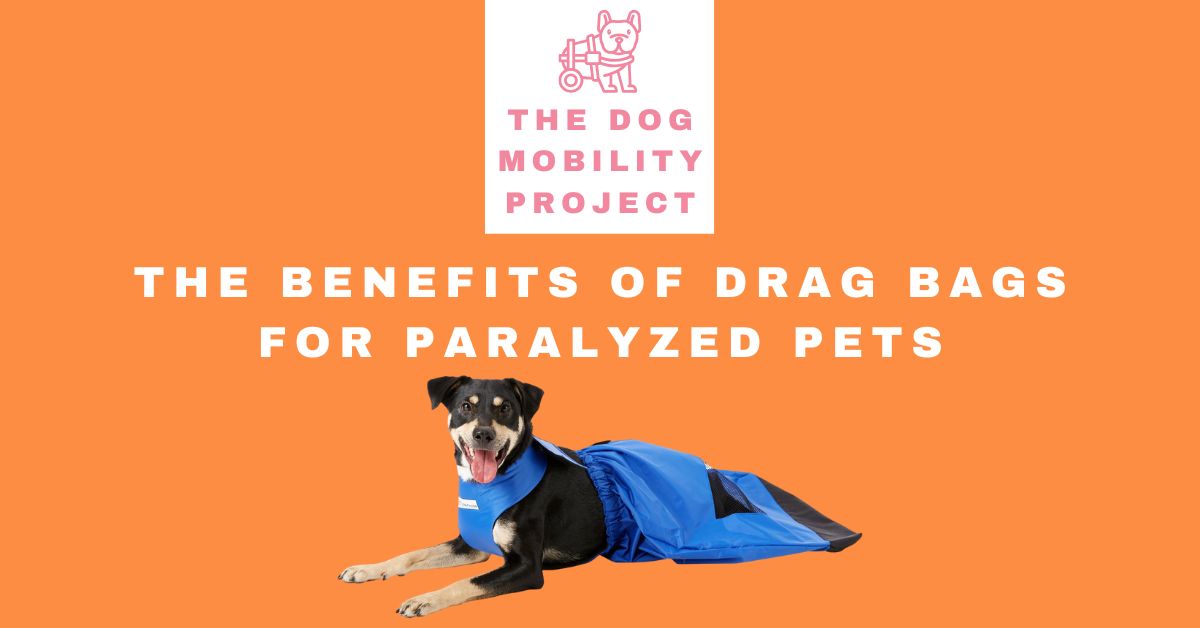
For pet parents of paralyzed dogs and cats, ensuring their pets stay active and happy is a top priority. While wheelchairs are fantastic mobility solutions for outdoor adventures, they aren’t always practical indoors, especially for larger dogs or pets who want to rest. This is where drag bags come in. A drag bag for paralyzed dogs can be the perfect indoor mobility solution.
Drag bags are specially designed protective coverings that allow paralyzed pets to move freely around the house without causing abrasions, sores, or infections to their legs or chest that can happen when scooting around the house. They are essential for pet parents looking to enhance their furry friend’s quality of life.
Why Use a Drag Bag?

Paralyzed pets often drag themselves across surfaces since they most likely have lost sensation in their back legs; this can lead to accidental injuries, including skin damage, hygiene issues, and discomfort. Drag bags provide a soft barrier between the dog’s sensitive skin and the ground that prevents scrapes and keeps pets clean while allowing them to move with ease.
For incontinent pets, a diaper can be worn comfortably underneath their drag bag, and since many drag bags are made of water-resistant material, wearing a drag bag can help protect your furniture and carpet from accidents.
Key Benefits of Drag Bags
1. Protection Against Injuries
Scrapes on knees and elbows, rug burn on a dog’s abdomen, and abrasions on a dog’s legs are all common issues when caring for a handicapped pet. Without proper protection, paralyzed pets risk developing pressure sores and scrapes from dragging their legs across various surfaces. A well-fitted drag bag provides a smooth barrier that prevents friction-related injuries and keeps sensitive areas safe.
2. Increased Mobility Indoors
While wheelchairs are excellent for mobility outdoors, they can be cumbersome inside smaller spaces. While they’re great for keeping your dog active, they’re not designed to collapse or let your dog lie down. A drag bag is a great indoor alternative that allows your dog to do both. Drag bags allow pets to scoot freely across carpets, hardwood floors, and tile without obstacles, helping them stay active and independent.
3. Improved Hygiene and Cleanliness
Drag bags help contain any leaks, keeping both the pet and their environment cleaner. They are also machine-washable, making maintenance easy for pet parents. A paralyzed dog that already has a scrape or sore can wear a drag bag to prevent your dog from digging at the injury, offering some light protection.
4. Comfort and Warmth
Drag bags are made with soft, breathable materials that provide warmth and comfort. This is especially important for paralyzed pets as they may have reduced circulation in their hind legs and struggle to moderate their body temperature. Some drag bags even come with padding for extra support and coziness.
5. Prevention of Secondary Infections
Open sores and abrasions can lead to serious infections if left untreated. Drag bags minimize exposure to bacteria and dirt, reducing the risk of complications that could impact a pet’s overall health.
Is a Drag Bag Right for Your Dog?
A drag bag is an excellent mobility aid for many pets, but it’s designed for a very specific purpose.
A drag bag may be a good option if your dog:
- Has permanent or long-term rear limb paralysis.
- Scoots around the house independently.
- Develops scrapes or rug burns on the legs or chest.
- Needs protection while moving indoors.
- Uses a wheelchair outside but needs a comfortable indoor alternative.
A drag bag may not be appropriate if your dog:
- Still walks using their rear legs.
- Is recovering from a condition where your veterinarian wants them actively practicing walking.
- Has wounds that require a different protective dressing or treatment.
- Has not yet been evaluated for the underlying cause of their paralysis.
Choosing the right mobility aid depends on your dog’s diagnosis, stage of recovery, and long-term mobility goals.
Choosing the Right Drag Bag
When selecting a drag bag for your pet, consider the following factors:
- Size and Fit: Ensure the bag is snug but not too tight, allowing for free movement without restricting breathing or circulation.
- Material: Look for lightweight, breathable fabrics that are also durable and easy to clean.
- Closure System: Velcro or zipper closures make it easy to put on and remove, while adjustable straps ensure a secure fit.
- Floor Compatibility: If your home has hardwood or tile floors, a drag bag with a non-slip bottom may provide better traction.
A dog must be fully paralyzed in their back legs to benefit from a drag bag. If your dog can still use their back legs, a drag bag will become a tripping hazard and lead to possible injury.
Drag Bag vs. Dog Wheelchair: Do You Need Both?
Many owners assume they have to choose one or the other.
In reality, they serve different purposes.
| Drag Bag | Dog Wheelchair |
|---|---|
| Designed primarily for indoor use | Best for outdoor walks and exercise |
| Protects the legs and chest while scooting | Supports walking and encourages mobility |
| Allows dogs to rest comfortably | Designed for active movement rather than resting |
| Helps prevent rug burns and abrasions | Helps increase exercise and independence |
For many paralyzed dogs, the best solution isn’t choosing between the two—it’s using both in the situations where each works best.
Best Drag Bag for Paralyzed Pets
Walkin’ Pets Drag Bag

Designed specifically for paralyzed dogs and cats, the Walkin’ Drag Bag is the original drag bag and one most recommended by pet parents. It features a durable, machine-washable material and a breathable mesh top to keep pets comfortable. Made from lightweight, waterproof fabric, this drag bag provides excellent protection while allowing pets to move freely across different surfaces.
The Walkin’ Drag Bag is a great wheelchair alternative for inside the house. Many pet parents will use both a wheelchair and a drag bag, depending on the circumstance. I highly recommend using both the wheelchair for daily walks, exercise, and for playtime and the drag bag for indoors.
Tips for Introducing Your Pet to a Drag Bag
- Start Slow: Allow your pet to sniff and inspect the drag bag before putting it on.
- Use Positive Reinforcement: Offer treats and praise to encourage them to move with it on.
- Short Sessions: Begin with brief wear periods and gradually increase the time as they become accustomed to it.
- Monitor for Fit and Comfort: Check for any signs of discomfort or irritation, and adjust the fit if necessary.
Final Thoughts
Drag bags are a game-changer for paralyzed pets, offering protection, mobility, and improved quality of life. Whether your pet is adjusting to paralysis or has been scooting for years, a drag bag can provide the support they need to stay happy, healthy, and active. By incorporating this simple yet effective tool into your pet’s daily routine, you can ensure they continue to enjoy life to the fullest—one scoot at a time!
For more tips on caring for special needs pets, visit The Dog Mobility Project, where we celebrate every pet’s ability to live life in motion!
Frequently Asked Questions About Drag Bags for Paralyzed Dogs
What is a drag bag for dogs?
A drag bag is a protective fabric garment that covers a dog’s lower body and legs, allowing them to move around by scooting without scraping their skin or paws. Drag bags are most commonly used by dogs with rear limb paralysis or severe mobility impairments that prevent them from walking normally.
Which dogs benefit most from a drag bag?
Drag bags are often helpful for dogs with:
- Rear limb paralysis
- Degenerative Myelopathy (DM)
- Chronic spinal cord injuries
- Certain cases of IVDD
- Neurological disorders affecting the hind limbs
- Limb amputations that make scooting more comfortable
Your veterinarian or canine rehabilitation professional can help determine whether a drag bag is appropriate for your dog’s condition.
Can my dog wear a drag bag all day?
Generally, no.
A drag bag is designed for supervised use during periods of activity. Your dog should have regular opportunities to rest comfortably outside the drag bag, stretch, and have their skin checked for redness or irritation. This is especially important for incontinent pets, as they will need to have diapers or male wraps changed throughout the day to avoid urine scald or skin irritation.
The appropriate amount of time depends on your dog’s condition, activity level, and your veterinarian’s recommendations.
Can my dog sleep in a drag bag?
Most manufacturers recommend removing the drag bag before your dog sleeps or rests for extended periods.
Sleeping in a drag bag may increase pressure on certain areas of the body and reduce opportunities to inspect the skin for irritation.
Can a drag bag be used outside?
Drag bags are primarily designed for indoor use.
While brief trips outdoors may be appropriate on clean, smooth surfaces, rough pavement, gravel, sticks, and uneven terrain can wear down the fabric more quickly and increase the risk of damage.
For longer outdoor activities, many dogs benefit more from a properly fitted wheelchair.
Does my dog still need a wheelchair if they have a drag bag?
Possibly.
Drag bags and wheelchairs serve different purposes.
A drag bag helps protect your dog’s body while moving around indoors.
A wheelchair supports walking, exercise, and outdoor activities.
Many paralyzed dogs use both—a drag bag inside the home and a wheelchair for walks and adventures outside.
Can drag bags help dogs recovering from IVDD surgery?
It depends on where your dog is in the recovery process.
Immediately after IVDD surgery, many dogs require strict crate rest and controlled rehabilitation. During this period, unrestricted scooting may not be appropriate.
As recovery progresses, your veterinarian or rehabilitation specialist may recommend a drag bag if your dog continues to drag their hind limbs and has no movement in their back legs. Always follow your surgeon’s post-operative instructions.
Will a drag bag prevent pressure sores?
A drag bag can help reduce scrapes, rug burns, and abrasions caused by dragging across floors.
However, it does not completely eliminate the risk of pressure sores.
It’s important to:
- Check your dog’s skin daily.
- Keep the drag bag clean and dry.
- Ensure the fit isn’t too tight.
- Rotate your dog’s resting position regularly if they have limited mobility.
How do I know if my dog’s drag bag fits properly?
A properly fitted drag bag should:
- Cover the areas that contact the floor.
- Stay securely in place while your dog moves.
- Allow comfortable movement without restricting the front legs.
- Avoid rubbing or bunching.
- Keep the skin protected without being overly tight.
If you notice rubbing, twisting, or frequent slipping, the drag bag may need adjustment or a different size.
How do I clean a drag bag?
Most drag bags can be machine washed using a gentle cycle and mild detergent, but always follow the manufacturer’s care instructions.
Allow the drag bag to dry completely before using it again, and inspect it regularly for worn fabric or damaged seams.
Can cats use drag bags?
Yes.
Drag bags aren’t limited to dogs. Many paralyzed or mobility-impaired cats also benefit from drag bags that protect their skin while allowing them to move around the home more comfortably.
The design and sizing may differ depending on the manufacturer.
What’s the difference between a drag bag and a dog wheelchair?
A drag bag protects your dog’s body while scooting across indoor surfaces.
A wheelchair supports your dog’s body so they can walk, exercise, and participate in outdoor activities.
These mobility aids are not competitors—they often work best together as part of a complete mobility plan.
Can a drag bag improve my dog’s quality of life?
For many dogs, yes.
By protecting the skin from abrasions and allowing greater freedom of movement around the home, a drag bag can help dogs remain more comfortable and independent.
While it doesn’t treat the underlying medical condition, it can make daily life easier for both dogs and their caregivers.
When should I choose a drag bag instead of a wheelchair?
Use a drag bag when your primary goal is protecting your dog’s skin while they move around indoors. Use a wheelchair when your goal is supporting walking, exercise, and outdoor mobility. Many dogs benefit from both: a drag bag for comfortable movement inside the home and a wheelchair for walks, rehabilitation, and time outdoors..
Related Articles





Leave a Reply