
When my Yorkie, Riley, developed diabetes, I thought the hardest part would be managing his insulin and diet. I wasn’t prepared for the day his world suddenly went dark. Practically overnight, cataracts took away his sight. One day he was chasing toys and wagging at the door, the next he was bumping into walls, refusing to leave my side, and shrinking into himself.
My playful, confident dog had become withdrawn and fearful. He no longer wanted to play, and he seemed to lose interest in everything that once brought him joy. Watching Riley struggle was heartbreaking—and as his person, I felt helpless.
Finding Our Way Again
Caring for a newly blind dog isn’t just about adjusting their environment—it’s about helping them feel safe again. Riley taught me that patience, reassurance, and creativity are everything.
- Consistency was key. We stopped moving furniture, kept his food and water in the same place, and guided him gently through familiar paths around the house.
- Our voices became his lifeline. We used calm, steady words of encouragement, letting him know when we were near and cheering him on when he was brave enough to explore.
- Small wins mattered. Instead of long walks, we celebrated little moments—like when he found his way to his bed on his own or wagged his tail at the sound of a favorite squeaky toy.
It was a long road, but slowly Riley began to adjust. And while cataract surgery eventually gave him back his vision, the lessons I learned during his blindness stay with me to this day.
What I Wish I Had Known: Blind Dog Halos
Looking back, I wish I had known about halos for blind dogs. It wasn’t until I started working for a pet mobility company that I even knew these existed, and I found myself in the same position every special needs pet parent finds themselves in, saying, “I wish I had known about this sooner.” These clever devices are lightweight harnesses with a circular “halo” that acts as a bumper, gently guiding blind dogs away from obstacles before they bump into them.
For Riley, a halo could have:
- Reduced his fear of walking into walls or furniture.
- Given him the confidence to move around the house more independently.
- Allowed him to play and explore without so much hesitation.
Blindness doesn’t have to mean the end of joy or independence for a dog. With the right tools—like a halo—dogs can regain their confidence, explore safely, and even play again.
What is Muffin’s Halo?
Muffin’s Halo is a specially designed mobility aid created just for blind dogs. It’s made up of three parts: a comfortable harness, angel-wing side panels, and a lightweight halo that forms a circular bumper around the dog’s head.
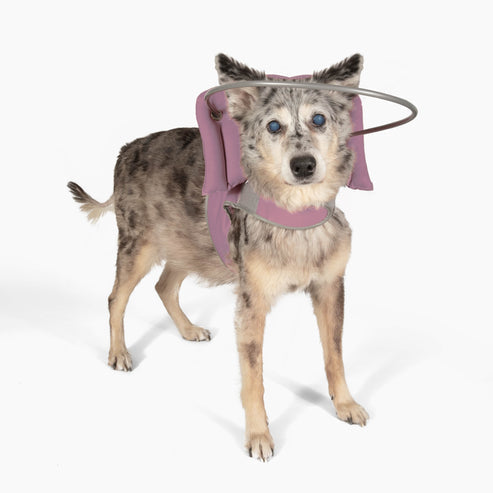
Here’s how it works:
- When a blind dog approaches a wall, furniture, or other object, the halo touches it first, gently redirecting them before their face or body makes contact.
- This “early warning system” teaches dogs to navigate safely and builds their confidence to move around freely.
- Because it doesn’t block their movement or add much weight, dogs can wear it comfortably throughout the day while exploring, playing, or even going for walks.
For blind pups, Muffin’s Halo is more than just a tool—it’s a lifeline. It helps them avoid painful bumps and injuries, reduces anxiety, and gives them back a sense of independence. For pet parents, it offers peace of mind knowing their dog can move safely in a world they can’t see.
Lessons for Other Pet Parents
- Give your dog time to grieve. Just like humans, dogs need time to adjust to sudden changes.
- Rely on other senses. Use scent and sound to help guide and enrich your dog’s world.
- Celebrate progress. Every small step forward is a victory.
- Consider adaptive tools. From halos to textured floor mats, there are resources that make life easier.
Closing Thought
Riley’s blindness was one of the hardest challenges we faced together—but it also deepened our bond. He taught me resilience, patience, and the importance of meeting your dog where they are, not where they used to be. We were fortunate with Riley; he was a candidate for cataract surgery, so eventually he regained his vision. But the months, with him being unable to see, taught me a whole lot and gave me a lot of insight into how it feels when your dog goes through such a significant health change. It’s a big part of the reason why I created The Dog Mobility Project–to give pet parents the resource that I didn’t have at the time.
If your dog is losing their sight, know this: they can still live a full, happy, tail-wagging life. And if I could go back and give Riley one gift during his darkest days, it would be Muffin’s Halo—a simple, ingenious tool to help him find his way with confidence.

 The Dog Mobility Project
Leave a comment