Bringing a special needs dog into your family is a beautiful way to teach compassion, patience, and resilience—not only to your dog but also to your children. Whether your pup uses a wheelchair, is blind, or requires extra care, kids can play an important role in their daily life. With the right guidance, children can build a deeper bond with their dog while learning valuable life lessons about kindness and responsibility.
1. Start With Honest, Age-Appropriate Conversations
Children are naturally curious. When they see a dog with a wheelchair or notice that their pup can’t see, they will have questions. Instead of shying away, explain in simple terms what makes your dog special:
- “Our dog’s legs don’t work like ours, so the wheelchair helps them run and play.”
- “Our dog can’t see, but their other senses—like smell and hearing—are really strong.”
Framing your dog’s needs in a positive way helps kids understand that different doesn’t mean less.
2. Involve Kids in Daily Care
Giving kids age-appropriate responsibilities helps them feel proud and connected:
- Young children can help fill water bowls or gently brush the dog.
- Older kids can assist with putting on the wheelchair, guiding a blind dog around obstacles, or tracking feeding and medication schedules.
By making care a family activity, you show your child that helping is both important and rewarding.
3. Teach Respect for Boundaries
Some special needs dogs need extra space or gentle handling. Remind children to:
- Let the dog rest when tired.
- Avoid startling a blind dog by announcing themselves before petting.
- Be gentle when helping with mobility equipment.
Kids learn empathy when they recognize their dog’s limits and adjust their behavior.
4. Encourage Play and Togetherness
Special needs doesn’t mean no fun! Adapt activities so your dog and children can still enjoy playtime:
- A wheelchair dog may love fetch on flat ground or short walks.
- A blind dog may enjoy toys that squeak or make noise.
- Simple cuddle time can be just as valuable as active play.
When kids see that their dog can still have joy-filled moments, they better understand that challenges don’t take away happiness.
5. Model Compassion and Patience
Children often mirror what they see. When you calmly help your dog into a wheelchair, speak gently, or encourage your blind pup with patience, kids learn that love means meeting others where they are. These lessons extend far beyond pet care—they shape how children treat people too.
6. Celebrate Small Victories Together
Cheer when your dog learns to navigate with their wheelchair or confidently finds their food bowl without sight. Invite your kids to celebrate those wins—it reinforces resilience and shows them that progress comes in many forms.
Final Thoughts
A special needs dog may require extra care, but the rewards of sharing life with them are immeasurable. By helping kids understand and participate in that journey, you’re raising compassionate caregivers who will carry those lessons into every relationship they build.
Life with a special needs dog isn’t about focusing on what’s missing—it’s about celebrating what’s possible, together.
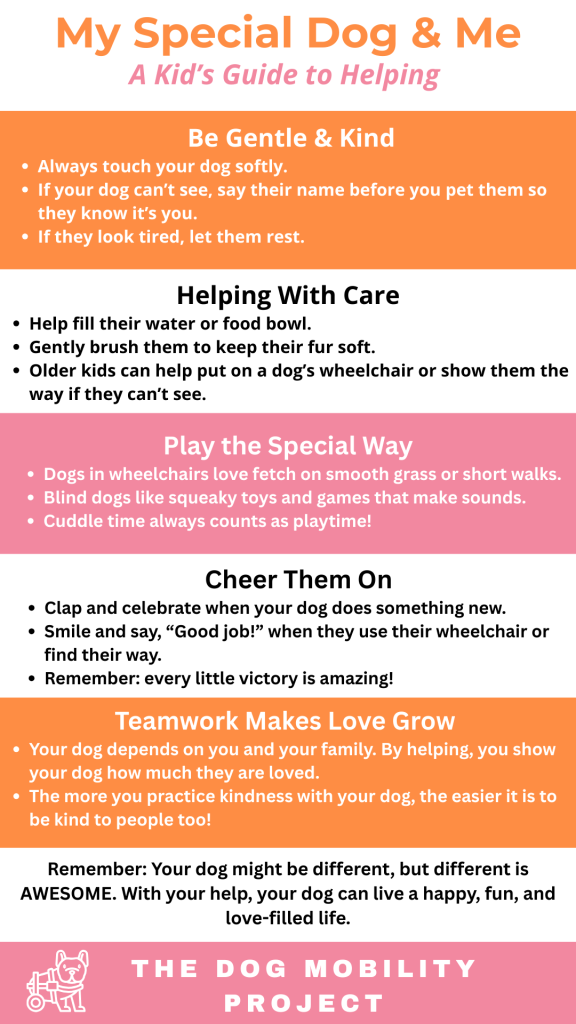
A Kid’s Guide to Caring for a Special Needs Dog:




 The Dog Mobility Project
Leave a comment