
A First-Time Buyer’s Guide
Helping your large dog regain their mobility can feel overwhelming. Large dogs are active dogs, it’s heartbreaking to see your gentle giant struggle. Not only are you dealing with their emotional distress and frustration, but you’re also dealing with the physical pain and effort of having to lift up and support your dog to get them outside. It doesn’t have to be this hard. Wheelchairs are designed specifically for this purpose. Yes, dealing with a larger dog can mean some extra challenges, but getting your dog back up on all fours and moving again is possible. When choosing a cart for your pup, you’re not just picking a product—you’re making a decision that affects your dog’s comfort, safety, and quality of life. And if you’re new to this, the process can feel especially daunting.
This guide is here to help you understand the key considerations, ease your worries, and give you the confidence to choose the right wheelchair for your big dog.
Why Large Dogs Need Special Consideration
Mobility loss in large breeds can be especially hard on both the dog and their owner. Their sheer size and weight mean that every time they move, they are placing more strain on their joints, which can put them at even greater risk for joint conditions. Dogs like German Shepherds, Golden Retrievers, Labs, Rottweilers, and Great Danes may develop mobility issues due to:
- Hip dysplasia
- Degenerative myelopathy (DM)
- Arthritis
- Post-surgical recovery
- Injury or trauma
- Neurological issues
Their size makes it more challenging to assist them, which means that the right mobility aid can make all the difference.
What Makes a Wheelchair “Large Breed” Friendly?
Not all dog wheelchairs are created equal—especially when it comes to supporting heavier, taller dogs. Look for:
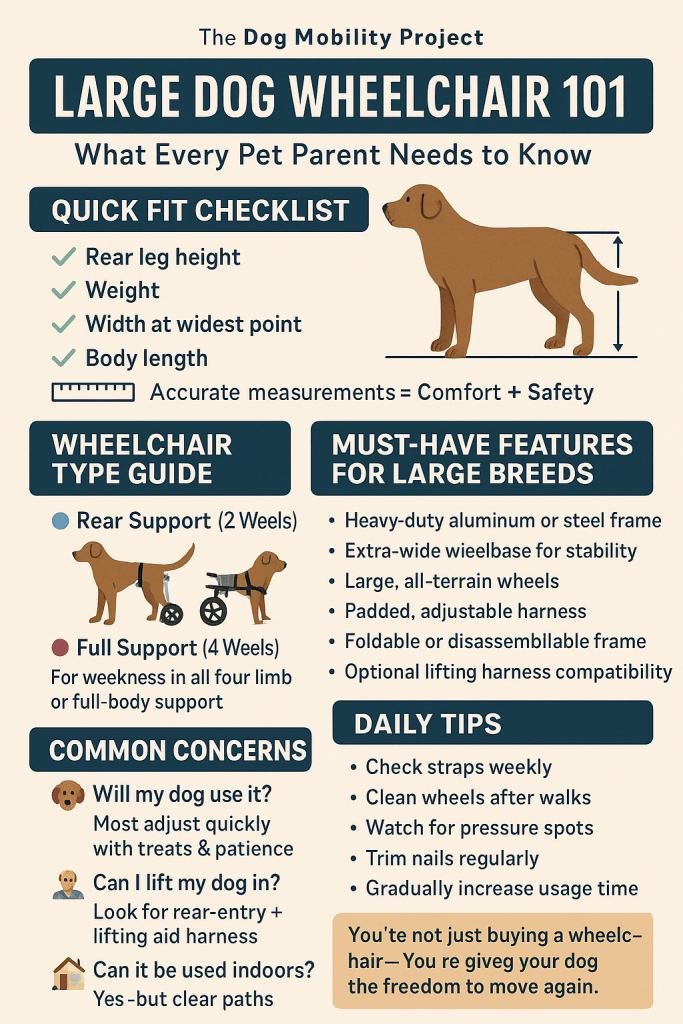
- Heavy-duty frame: Made of aluminum or stainless steel to support the dog’s weight. Quality matters when you’re dealing with a heavier dog. Avoid plastic carts, they will not be able to support your dog.
- Wider wheelbase: Offers more stability for larger dogs who may sway or stumble. Yes, a wider wheelbase may make it more challenging for your dog to use it’s cart inside, but I promise you it will offer the most stability and support possible. On average, a dog’s cart will be 12″ wider than it’s hips (6″ on either side).
- Adjustable height, width, and length: To ensure a custom, ergonomic fit. Your dog’s wheelchair needs to fit them comfortably. If you’re choosing an adjustable off-the-shelf wheelchair, make sure your dog isn’t using a cart that’s maxed out in length, width, or height.
- Large, rugged wheels: For better handling of outdoor terrain and overall ease of movement. Your dog will also need larger wheels, don’t go for a “cheaper” option with 8″ wheels (or smaller. Big dogs need big wheels. Look for a wheelchair with a 12′ wheel at the smallest.
- Supportive harness system: That won’t dig into sensitive areas or cause sores. Look for a wheelchair that offers optional upgrades for its harness. A bigger dog may need different support, so don’t be surprised if you need to buy a different style front harness or leg rings to give your dog better coverage and more support.
- Foldable or disassemblable frame: For easier transport and storage. A large dog needs a large wheelchair, which will take up A LOT of space. A foldable cart may be the only way that your dog’s wheelchair will fit into the trunk of your car.
How to Measure Your Dog Correctly
Measuring is one of the most important steps. Most manufacturers will provide a sizing guide, but in general, you’ll need:
- Rear leg height (from paw to groin) – this is best taken when your dog is lying down. A standing dog with weak back legs will not be able to stand at it’s fullest, which means you may end up with a measurement that is too short.
- Length (chest to rear) – usually taken from the dog’s armpit (behind the front arm) to the end of your dog’s body (at the rump, not the tip of the tail).
- Width (widest part of your dog’s body) – most often your dog’s rib cage is it’s widest point, I would take this one from the front, measure your dog across the chest.
- Weight – self explanatory, but double check your dog’s weight before you submit it. Weight loss or muscle loss is pretty common in a dog with weak back legs. If your dog has experienced significant weight loss, I would call the wheelchair company if your dog seems “small” for their breed–they can help you get the right size cart.
Tip: Take multiple measurements and double-check. A proper fit ensures comfort, mobility, and safety.
Rear Support vs. Full Support Wheelchairs
Understanding the type of wheelchair your dog needs is crucial.
- Rear Support (Two-Wheel Wheelchair)
Ideal for dogs with strong front legs but weak or paralyzed hind legs. Helps your dog walk and run while relieving weight from the back legs. This is the most commonly used type of wheelchair, an adjustable version might also be convertible to a full support wheelchair if needed further on. - Full Support (Four-Wheel Wheelchair)
Best for dogs with weakness in all four limbs or those recovering from serious injury/surgery or a degenerative condition like DM. A quad wheelchair supports the entire body, helping your dog to stand up and walk while being fully supported by all four legs.
Common Concerns for Large Dog Owners
1. “How will I get my big dog into the wheelchair?”
This is one of the most common fears—and it’s valid. Lifting a 70+ lb dog isn’t easy. Look for models that allow:
- One-person harnessing
- Step-in or rear-entry design
- Assistance slings that help guide your dog into place
- Training your dog to stand in place near a sturdy surface (like a couch) can help you guide them in gradually.
Even if you live alone, I promise it is possible to get your dog into the wheelchair without issue. A common trick is to use a harness to help get your dog up to standing and then place a footstool or small bench under your dog’s abdomen to help prop them up. From there, roll the wheelchair behind them and clip them in before removing the stool from underneath. It’s not easy, but it can be done.
Consider: Some companies offer harnesses that double as lifting aids for use outside of the cart, too.
2. “Will my dog accept the wheelchair?”
It’s natural to wonder if your dog will resist. While every dog is different, most large breeds adjust quickly—especially if:
- The wheelchair is properly fitted
- They’re introduced slowly with positive reinforcement
- You make it part of their daily routine
- You use their favorite treats or toys to encourage movement
The majority of big dogs understand right away that the wheelchair helps them, and they’re so excited to be running around that they’re most at risk of tiring themselves out rather than not accepting the wheelchair. Even then, take it slowly. Most likely your dog hasn’t been able to play in awhile, they will get tired, it’s your job to make sure they don’t get burnt out the first time out. Let them play for 10-15 minutes and then take them out of the cart to rest. You can always put them back in later, but it will take time for them to rebuild their stamina.
3. “Can I use the wheelchair indoors and outdoors?”
Yes—but size and layout matter. Large breed carts are bulkier (and wider), which can make maneuvering through tight indoor spaces difficult. Still, they’re perfect for:
- Yard time
- Daily walks
- Potty breaks
- Parks and trails with smooth terrain
Just be mindful of:
- Slippery indoor floors (add rugs or booties for grip)
- Narrow hallways or steps (some dogs may need to stay in the cart only while outdoors)
Your dog’s new cart will be bigger than they are, often by a foot wider which can make doorways difficult. If you have a lot of furniture, narrow hallways, or smaller doorways it may be best to use the cart outside, especially as your dog first adjusts.
Maintenance and Daily Use Tips
- Check straps and joints for wear and tear weekly
- Clean wheels and frames after muddy walks
- Monitor for signs of rubbing or pressure sores—adjust padding if needed
- Keep your dog’s nails trimmed to prevent injury while walking in the cart
- Take breaks often—especially for dogs new to using a wheelchair
How Long Should My Dog Use the Wheelchair?
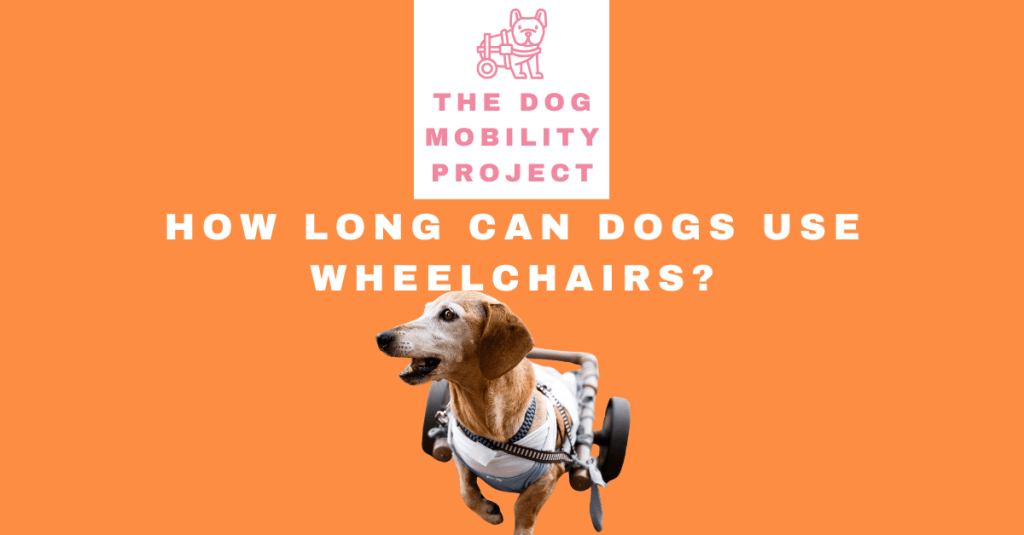
Start with short, supervised sessions—5 to 10 minutes at a time—and gradually increase duration based on your dog’s stamina. Watch for:
- Signs of fatigue (panting, slowing down, sitting)
- Pressure marks from the harness
- Happy tail wags and renewed confidence!
In no time at all, your dog will be using their wheelchair like a pro, but when you first start out take it easy. Several 10-15 minute sessions throughout the day is plenty until your dog rebuilds its strength. Overtime your dog can lengthen their cart time. Don’t give up hope, I’ve seen wheelie dogs climb mountains in their carts!
Emotional Support for You and Your Dog
Caring for a large dog with mobility issues is a labor of love—but it’s also physically and emotionally demanding. You are not alone.
💬 Connect with communities like:
- The Dog Mobility Project Facebook Group
- Tripawds Large Dog Forum
- Reddit’s r/dogswithdisabilities
- Walkin’ Pets’ customer stories and community
- Your vet or rehab specialist for moral and medical support
Checklist: What to Look For Before Buying
✅ Adjustable frame for a custom fit
✅ Harness and support system included
✅ Weight and breed specifications
✅ Return policy and warranty
✅ Customer reviews or vet recommendations
✅ Compatibility with lifting slings (optional but helpful!)
✅ Company customer service reputation
Final Thoughts
Choosing a wheelchair for your large dog is a big step—but it’s a beautiful one. You’re not just buying a tool. You’re giving your best friend the chance to move, play, and explore the world again.
Yes, it might take patience. And yes, it might take a little practice. But with the right wheelchair and your support, your dog can enjoy a renewed sense of freedom.
You’ve got this. And we’re here to help every step of the way.

 The Dog Mobility Project
Leave a comment