When a dog struggles with mobility, even the simplest tasks—like climbing stairs, getting into the car, or going outside to go potty—can become difficult or even impossible. For pet parents, watching their beloved dog lose independence is heartbreaking. But there’s good news: dog lifting harnesses offer a practical, supportive solution that can drastically improve your dog’s comfort and mobility, while making daily care easier for you.
In this article, we’ll explore how dog lifting harnesses help in real-life situations, which dogs benefit from using them, and why they’re an essential tool in supporting dogs with mobility issues.
What Is a Dog Lifting Harness?
A dog lifting harness is a supportive device designed to help you safely lift, guide, or stabilize your dog. Unlike standard walking harnesses, lifting harnesses are made to support a dog’s body weight—especially the hips, rear, or full body. Many are padded, adjustable, and designed to reduce strain on both you and your dog.
Real-Life Challenges Solved by a Dog Lifting Harness
1. Helping a Dog in and Out of the Car
For senior dogs or dogs recovering from surgery, jumping into the car becomes a hurdle. A lifting harness gives pet parents a safe way to boost their dog into the vehicle without risking injury to the dog—or to themselves. Rear support or full-body harnesses provide the extra lift where it’s needed most.
2. Navigating Stairs
Stairs can be especially dangerous for dogs with weak hind legs or balance issues. A lifting harness allows you to stabilize your dog as they move up or down the steps, helping prevent falls and injuries.
3. Supporting Potty Breaks
Dogs with hind limb weakness or conditions like degenerative myelopathy may struggle to squat or lift their leg to urinate. A harness gives gentle support and balance, allowing dogs to relieve themselves comfortably without falling over.
4. Assisting Post-Surgery Recovery
After orthopedic surgery (like TPLO or spinal surgery), dogs are often under strict mobility restrictions. A lifting harness makes it easier to follow rehab protocols—helping dogs get outside, move around the house, or perform physical therapy with less risk of reinjury.
5. Managing Daily Movement for Arthritic Dogs
Dogs with arthritis may have difficulty getting up from lying down or moving from room to room. Even getting up off the ground after a long nap can be difficult for dogs with arthritis. A lifting harness can provide ongoing support throughout the day, helping them maintain independence and making your dog’s life easier.
Which Conditions Benefit from a Dog Lifting Harness?
Dog lifting harnesses are especially helpful for dogs with:
- Arthritis
- Hip dysplasia
- Degenerative myelopathy (DM)
- Intervertebral disc disease (IVDD)
- Post-surgical recovery
- Paralysis or partial paralysis
- Neurological disorders (e.g., cerebellar hypoplasia)
- Muscle weakness due to age or illness
Why Dogs Need Lifting Harnesses
When a dog loses mobility, they’re at greater risk of injury, frustration, and anxiety. Many dogs become sedentary, which can lead to further muscle loss and decline. Keeping a dog active is key to their living life to the fullest. An active dog stays active. Using a harness is an easy way to help your dog stand, walk, and get around with ease. A lifting harness:
- Reduces stress on weakened joints
- Encourages safer movement
- Helps maintain muscle strength and circulation
- Builds confidence in dogs struggling with balance
- Allows continued engagement in family life
For pet parents, lifting harnesses also protect against back injuries by offering ergonomic lifting points, rather than trying to lift a heavy dog from under the belly or rear. Constantly lifting your dog can lead to real injury. If you’re not able to safely lift and support your dog’s full weight, there’s no reason to hold back from getting your dog a harness. Trust me, your back will be thankful.
Choosing the Right Lifting Harness
Not all lifting harnesses are the same. Consider:
- Where your dog needs support: Front, rear, or full-body
- Comfort and padding: Especially for dogs with sensitive skin or long-term use
- Adjustability: A good fit is essential for safety
- Handles and straps: Should be easy to grip and positioned for control
If your dog has a progressive condition, look for a harness that can grow with their needs—such as a modular system that adds front or rear support as needed.
Spotlight on the Help ‘Em Up® Harness
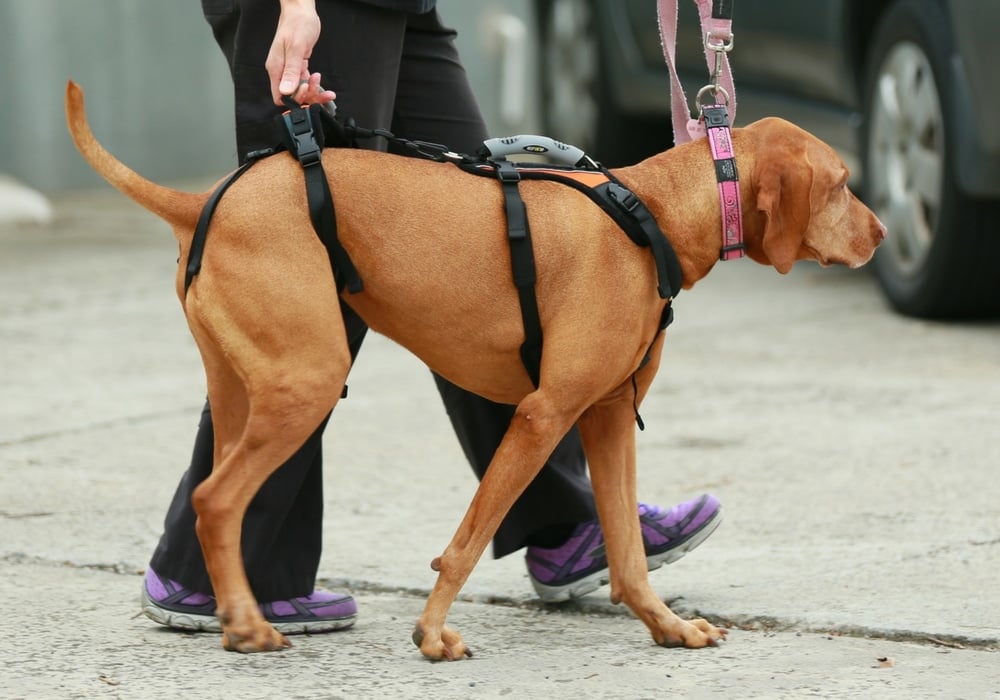
One of the most trusted and widely recommended dog lifting harnesses on the market is the Help ‘Em Up® Harness. Designed by a team of veterinarians and engineers, this harness offers full-body support—front and rear—and is ideal for dogs with complex or progressive mobility issues.
Not only is this harness designed specifically for pets with mobility challenges, but the Help ‘Em Up Harness is highly regarded and popular within the veterinary and pet rehabilitation communities for its effectiveness in supporting dogs with mobility issues and it’s versatility for use during therapy sessions and daily activities.
Full-Body Support with Ergonomic Design
The Help ‘Em Up Harness features two connected pieces—one that supports the front legs and shoulders, and another for the hips and hind legs. The two-piece system distributes weight evenly across your dog’s body, reducing strain and avoiding pressure points.
Durable and Comfortable
Made from neoprene and other padded, water-resistant materials, the harness is built for long-term wear. The interior padding prevents chafing and is safe to leave on for extended periods—especially helpful for dogs who need daily lifting or assistance throughout the day.
Easy Lifting with Built-In Handles
The harness features ergonomic handles at both the front and rear sections, allowing caregivers to gently assist the dog while maintaining good body mechanics for themselves. The handles make it easy to help a dog:
- Get up from lying down
- Walk up or down stairs
- Get in and out of vehicles
- Stabilize for bathroom breaks
- Navigate uneven terrain
A Harness That Grows with Your Dog’s Needs
As many mobility conditions progress over time, the Help ‘Em Up® Harness can adapt. You can start with either the front or rear piece, depending on where your dog needs help, and add the other section later. The harness is also compatible with slings and can be used alongside carts or wheelchairs for dogs needing additional support. Be aware that your dog will still need to wear the wheelchair harness as the Help ‘Em Up is not yet fully compatible with a wheelchair.
The Help ‘Em Up® Harness is a game-changer for many pet parents. Whether your dog is recovering from surgery, aging, or managing a progressive condition, this harness allows for compassionate care while promoting safe movement and maintaining quality of life.
When choosing a dog lifting harness, always consider your dog’s specific condition, size, and lifestyle. The Help ‘Em Up® Harness stands out for its thoughtful design, comfort, and functionality—making it a top choice for full-body dog support.


 The Dog Mobility Project
Leave a comment