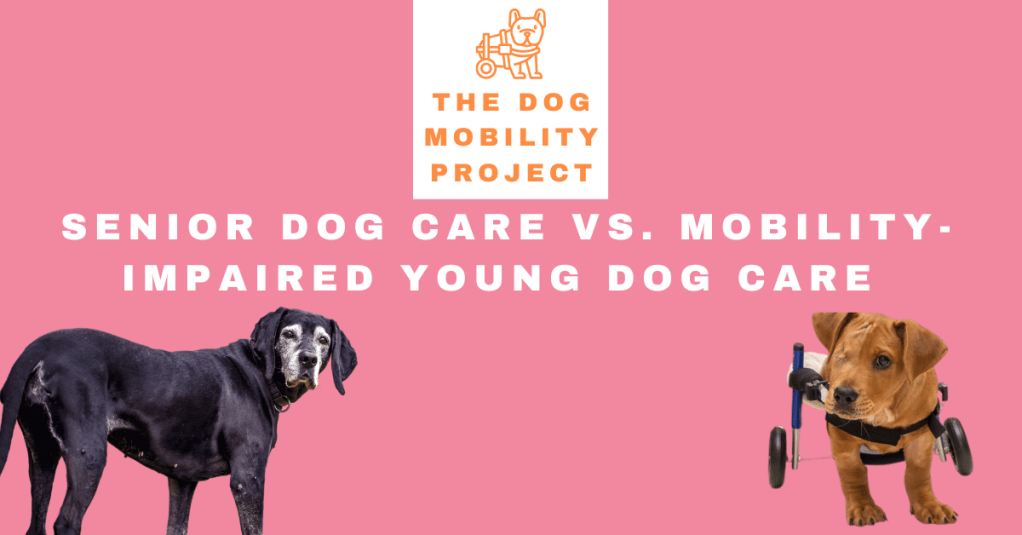
Caring for a dog with mobility challenges requires patience, dedication, and an understanding of their unique needs. However, the approach to caring for a senior dog with mobility issues differs significantly from that of a young dog with a disability. While both require special attention, their challenges, energy levels, and long-term care considerations vary greatly. Understanding these key differences can help pet parents provide the best possible care for their beloved companions.
1. Energy Levels & Activity Needs
Senior Dogs:
Older dogs naturally slow down as they age. Their energy levels decrease, and they may be less inclined to engage in high-intensity activities. Their mobility challenges are often due to arthritis, degenerative joint disease, or muscle weakness, meaning they require low-impact exercises such as:
- Short, leisurely walks
- Hydrotherapy for joint support
- Gentle stretching and massage
- Soft, padded surfaces to reduce joint strain
Young Mobility-Impaired Dogs:
Despite their physical limitations, young dogs often maintain a high energy level and playful spirit. Their challenges may stem from congenital disabilities, injuries, or neurological disorders, but they still have the drive to run, play, and explore. This means their care should include:
- Adaptive play sessions with modified toys
- Physical therapy to strengthen muscles
- Mobility aids like wheelchairs to encourage movement
- Safe, enclosed spaces to allow for supervised playtime
2. Medical & Health Considerations
Senior Dogs:
Health complications increase with age. Senior dogs often face a combination of issues, including:
- Arthritis and joint pain
- Cognitive decline (dementia)
- Organ function deterioration
- Decreased immune response
Their care involves routine vet visits, pain management, supplements like glucosamine and omega-3s, and close monitoring for signs of discomfort or cognitive changes.
Young Mobility-Impaired Dogs:
Young dogs with disabilities may require intensive medical intervention early in life, such as surgeries, physical therapy, or assistive devices. Their primary medical concerns often include:
- Orthopedic issues requiring rehabilitation
- Neurological conditions needing ongoing therapy
- Skin care to prevent sores from mobility aids
- Nutritional needs to support muscle development
Unlike senior dogs, young disabled dogs may have fewer systemic health concerns but require specialized interventions for their condition.
3. Emotional and Behavioral Differences
Senior Dogs:
Older dogs are typically more relaxed and set in their routines. They may experience anxiety due to declining senses (hearing and vision loss) or cognitive dysfunction. Keeping their environment predictable, offering mental stimulation, and providing extra reassurance can help maintain their quality of life.
Young Mobility-Impaired Dogs:
A young dog with a disability may not even realize they are different. Their enthusiasm for life remains intact, and they often adapt quickly to mobility aids. However, they may experience frustration if they cannot keep up with other dogs or engage fully in activities. Enrichment, socialization, and interactive toys can help keep them engaged and happy.
4. Long-Term Care & Adaptation
Senior Dogs:
Aging is a progressive process, meaning senior dogs will continue to decline in mobility and overall health. Care strategies must adapt over time to accommodate increasing limitations, such as:
- Installing ramps and non-slip flooring
- Adjusting their diet to maintain weight and joint health
- Providing orthopedic bedding for comfort
- Assisting with mobility through harnesses and slings
Young Mobility-Impaired Dogs:
A young dog’s condition may improve, stabilize, or worsen depending on the cause. The focus is on enabling independence while ensuring safety. Long-term considerations include:
- Continuous evaluation of mobility aids
- Strength training and therapy to maintain function
- Adapting home environments for accessibility
- Behavioral training to foster confidence and problem-solving skills
Conclusion
While both senior and mobility-impaired young dogs require special care, their needs differ in significant ways. Senior dogs need gentle support to age gracefully, while young disabled dogs require dynamic solutions to help them live active, fulfilling lives. Recognizing these differences ensures that every dog, regardless of age or ability, gets the care, love, and support they need to thrive.
At The Dog Mobility Project, we believe every dog deserves a life in motion. Whether you’re caring for a senior pup or a young dog with mobility challenges, we’re here to provide resources, support, and inspiration to help you navigate their journey.


 The Dog Mobility Project
Leave a comment