
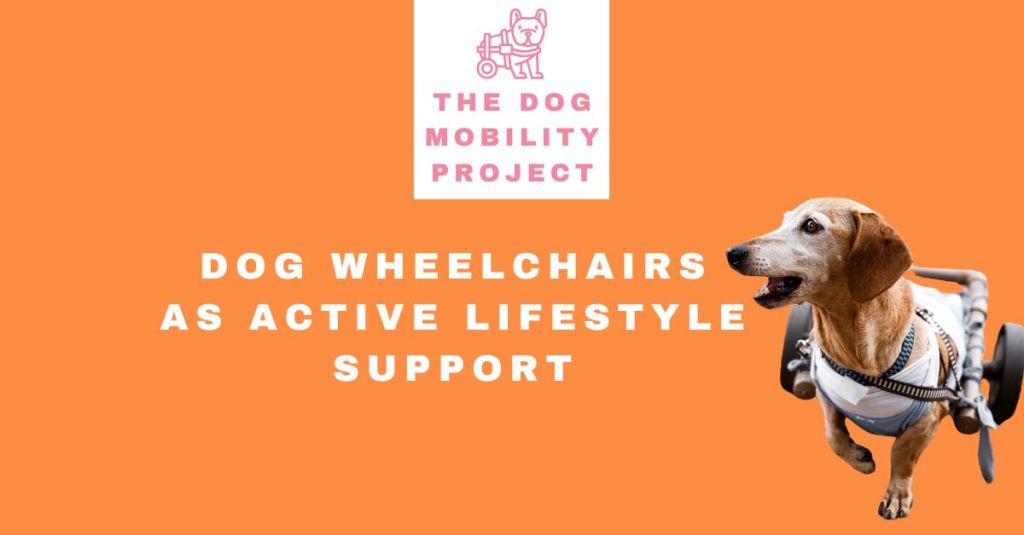
When a dog begins to struggle with mobility, a wheelchair is a life-changing solution for you and your best friend. Wheelchairs restore your dog’s freedom and independence and get them back to what’s important, spending time with their family. But not all dog wheelchairs are the same. Deciding which cart is the best for your dog can be overwhelming, and it’s hard to know where to start.
Choosing between a rear support (two-wheel) and a full support (four-wheel) wheelchair depends on your dog’s specific needs. Understanding the difference between these two styles—and knowing how to determine which one is right—will ensure your dog gets the support they need to stay active and comfortable.
Rear Support vs. Full Support Wheelchairs
Rear Support Wheelchairs (Two-Wheel Carts)
A rear support wheelchair is designed for dogs who still have strength in their front legs but struggle with weakness, paralysis, or mobility loss in their hind legs. This type of wheelchair supports the back end while allowing the dog to use their front legs to propel forward. It’s an excellent option for pets with conditions like:
- Degenerative Myelopathy (DM)
- Hip Dysplasia
- Arthritis
- Spinal injuries affecting the hind legs
Rear support wheelchairs are ideal for dogs who remain active and can still bear weight on their front legs. These carts allow dogs to run, play, and navigate their environment with ease.
Full Support (Four-Wheel) Wheelchairs
A full support wheelchair, also known as a quad or four-wheel cart, provides support for both the front and rear legs to provide full body support. This type of wheelchair is necessary for dogs with significant weakness in all four limbs or those who have lost coordination in their front legs. Full support carts are commonly used for pets with:
- Advanced Degenerative Myelopathy (DM)
- Wobbler Syndrome
- Stroke recovery
- Neurological disorders affecting balance and coordination
This style of wheelchair evenly distributes weight across all four wheels, reducing strain on the dog’s body and allowing them to move comfortably. To benefit from a quad wheelchair, your dog still needs to have enough leg strength to steer and propel the wheelchair forward.
How to Tell Which Wheelchair Your Dog Needs
Choosing between a rear support and a full support wheelchair comes down to your dog’s overall mobility. The easiest way to determine their strength and support needs is by performing the towel test.
The Towel Test
The towel test is a simple way to assess your dog’s leg strength and determine the level of support they need from a wheelchair.
Step 1: Rear Leg Support Check
- Place a towel or sling under your dog’s abdomen, just in front of the hind legs.
- Lift their back end slightly off the ground, allowing them to bear weight only on their front legs.
- If your dog can walk forward comfortably using just their front legs, a rear support wheelchair may be the best choice.
Step 2: Front Leg Support Check
- Now, gently lift the towel higher so your dog is fully supported and their weight is evenly distributed between the towel and their front legs.
- If they struggle to maintain balance, stumble, or show significant weakness in their front legs, a full support wheelchair will likely be necessary.
This test gives a clear indication of how much strength your dog still has in their front legs. If they are strong and stable, a rear support wheelchair will be sufficient. If they show front leg weakness, a full support wheelchair is the better choice.
Final Considerations
Every dog is unique, and their mobility needs may change over time. Some dogs start with a rear support wheelchair and eventually require a full support model as their condition progresses. Regularly assessing your dog’s mobility and adjusting their support as needed will keep them comfortable and active for as long as possible.
By using the towel test and understanding the differences between rear and full support wheelchairs, you can make an informed decision that best supports your dog’s mobility, ensuring they continue to live life to the fullest!


 The Dog Mobility Project
Leave a comment