
As dogs age or develop mobility challenges, everyday activities like climbing stairs can become difficult or even dangerous. Whether your dog is showing signs of discomfort, struggling with balance, or has lost the ability to use their hind legs entirely, there are ways to make stairs safer and more manageable.
Signs Your Dog Is Struggling on the Stairs
Recognizing when your dog is having trouble with stairs is crucial for preventing injuries. Look for these common signs:
- Hesitation or Avoidance: Your dog may pause at the base of the stairs or refuse to go up or down.
- Slipping or Stumbling: If your dog is losing footing or appears unsteady, it could indicate muscle weakness or joint pain.
- Whining or Panting: Signs of distress or exertion could mean your dog is experiencing pain when using the stairs.
- Using Only the Front Legs: Some dogs rely heavily on their front legs to compensate for weakened hind legs. This may cause your dog to come down the stairs faster than they meant to.
- Lagging Behind or Needing Assistance: If your dog requires your support to navigate stairs or moving slowly on the stairs, they may need additional help.
Be observant; many of the signs that your dog is struggling on the stairs are easy to dismiss as signs of aging or even ignored. Watching your dog descend the stairs is a good way to see how in control your dog is. If your dog gets faster and faster as they go down the stairs, they may not have enough leg strength to control the speed at which they descend, and this may be a sign that your dog needs help. If your dog takes one step at a time and pauses in between, they may be aware that their legs are weaker than the used to be and may be a sign that they aren’t confident and need your help on the stairs.
How to Help Your Dog Use the Stairs
There are several ways to support dogs struggling with stairs, ranging from simple modifications to specialized equipment:
1. Provide Traction
- Add non-slip stair treads or rubberized mats to reduce slipping.
- Trim your dog’s nails and paw fur to improve their grip.
- Some pets do well wearing traction socks or boots inside the house to help them keep their grip on the stairs and slippery floors.
2. Use Mobility Aids
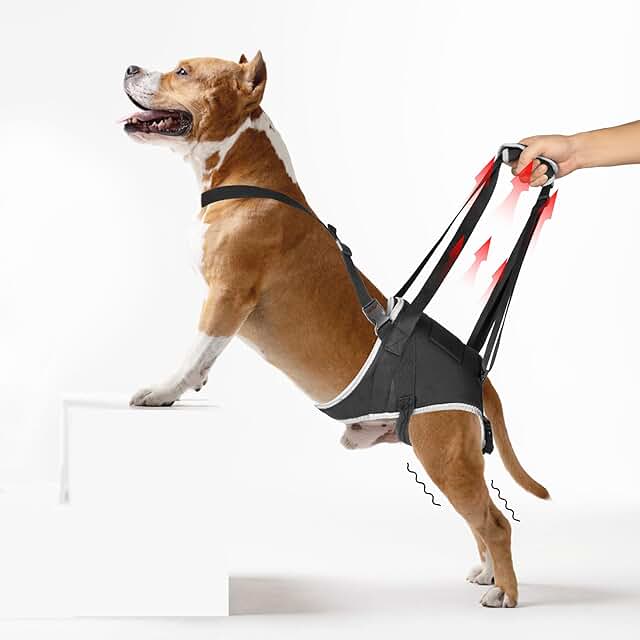
- Lifting harnesses or slings can provide extra support, especially for dogs with weak hind legs. Different harnesses provide different levels of support; make sure to choose one that can be tightly adjusted and has a handle that lets you comfortably lift and support your dog as needed.
- Dog ramps can replace stairs for smaller staircases or decks.
- Stair gates can prevent dogs from attempting stairs when unsupervised.
3. Modify Stair Access
- If stairs are too steep, consider adding a gradual incline ramp.
- Keep stairways well-lit to improve visibility, particularly for senior dogs with vision loss.
- Use a safety gate at the top and bottom of your stairs to prevent your dog from using them without your assistance.
4. Encourage Slow, Safe Movement
- Use treats and positive reinforcement to encourage your dog to take it one step at a time.
- If your dog isn’t quite ready for a lifting harness, walk alongside them for support, ensuring they don’t rush or panic.
Helping a Paralyzed Dog on Stairs
For dogs that are completely paralyzed in their hind legs, stairs present a unique challenge. However, there are ways to safely navigate them:
Choosing the Right Dog Harness for the Stairs
When it comes to supporting your dog on stairs, selecting the right harness can make a significant difference. There are several types to consider:

- Rear Support Leash Style Harness: This type of harness features two loops that pull up the dog’s back legs, allowing you to give your dog’s hind end a boost. It’s particularly useful for dogs who need a bit of extra stability without restricting their motion. A leash-style rear harness offers only gentle support and is meant to guide but not lift your dog entirely off the ground.
- Rear Harness: Designed to support the hind end, the rear harness offers targeted assistance for dogs with weak or injured back legs. This style harness provides more suppoty and control the a leash style harness. It helps distribute weight evenly and can be paired with lifting techniques to ease stair navigation.
- Full Body Harness: For dogs requiring comprehensive support, a full body harness wraps around the chest and abdomen, offering enhanced control and stability. This type is ideal for dogs with severe mobility issues or paralysis, ensuring safety as you assist them up and down stairs.
Avoid a loose-fitting sling that wraps around the center of your dog’s body, as this may slip when you’re on the stairs and make it harder to support your dog. If your dog is small enough, using a pet stroller or backpack carrier is an easy way to transport them up and down stairs.
Conclusion
If your dog is struggling with stairs, don’t ignore the signs—there are plenty of solutions to make their lives easier and safer. Whether it’s adding traction, using a mobility aid, or carrying them, you can ensure your furry friend remains comfortable and confident in their home. Always consult your vet or a canine rehabilitation specialist for additional guidance on mobility challenges.
By making small adjustments, you can help your aging or disabled dog maintain their independence and quality of life!





 The Dog Mobility Project
Leave a comment